Managers Club
All questionsCollected Wisdom

What's a personal habit that contributes to your success?

56 engineering leaders answered this question. Their responses, alphabetically.

Alexandra Paredes

Head of Engineering at Code Climate

To be honest, I wish I was better at habits. I have routines that I tried to maintain and iterate on but also I keep things flexible because I know that life is unpredictable and I leave room for that. At a higher level, I’d say there are a couple questions that I continuously ask myself: what could I’ve doing better, what is my goal/motivation and what do I feel proud of. I think going through this exercise keeps me focused and motivated. Recently, I’ve started to run. I’d used to do it regularly before moving to the US. It has been great to get into that rhythm again and working towards making it a habit ;).

Read the full interview
Andrew Mairena

MBA student at MIT Sloan School of Management (and formerly Application Engineering Manager at Thermo Fisher Scientific)

I’m big on preparation. Plans don’t always work out, right, but preparing is part of the process. Prior to the start of a work week, I create a to-do list. Within the list, I set objectives for myself, that both fulfill professional and personal commitments. I let this serve as a guide for the whole week. Of course, it changes on a daily basis, but at least I have a good starting point. At the end of the week on Friday, I’ll often review how well I did and I can get a good sense if I had a productive week or not. That’s one thing I started years ago, and I continue to do that today, even in business school.

Read the full interview
Anne Hjortshoj

Manager, UX Research and Strategy, Cisco Cloud Security

I’ve found it to be extremely useful for me to form as many informal networks as possible. I need to maximize my ability to get things done, and I can’t do that if I my communication paths follow an org chart. One way I’ve fostered this is to have a few 1x1s with people who are a few hops away in the organization; when I talk to them, I understand where I need to adjust my approach in order to make an initiative successful, and it’s just helpful to get unfiltered information and feedback from their perspective.

Read the full interview
Anthony Mazzarella

Director, Core Engineering at BAMTECH Media

My answer to this question, for the longest time, was allowing myself to be wrong. That’s still hugely important, for sure. However, more recently, I’ve realized its actually being comfortable with letting things fall to the floor. This can be a lingering to-do, an e-mail awaiting a reply, or even a significant deliverable.

Read the full answer
Anurag Maunder

SVP of Engineering at Kindred.ai

Aligning the engineering plan with business’ needs is a never-ending task. It isn’t cut and dry either, and so it requires my continuous attention on a rolling basis. To stay on top of both tracks, I anticipate the business’ needs and calibrate my team’s project pipeline accordingly.

I also rely on a constantly evolving to-do list and compile agenda points for all meetings to keep the gathering on track and make the best use of time.

Read the full interview
Bella Kazwell

Web Engineering Lead at Asana

I’m not sure if I would call this a habit, but I’m very good at project management, which I think is why I liked being a program lead. I like to support teams to execute on their projects to bring us all to a common goal. I even do that in my personal life… I recently moved and you could say I was the project manager of that process, making sure everything was where it needed to be, when it needed to be there. Staying focused on the end- goal is key to effective prioritization and managing work.

Read the full interview
Benjamin Encz

Director of Engineering at PlanGrid

Running. I used to hate it when I was younger because I was really bad at it. At some point, I got into the habit and now I can’t imagine a life without it. For me going on runs simultaneously serves as meditation and a source of many new ideas. Almost every time I return from a run I grab my phone or computer and take notes on ideas I came up with. It also refreshes me mentally and wakes me up after a long tiring day. Running has also reinforced a strong growth mindset in me – a few years ago I was barely able to run 2 miles and right now I’m in the middle of my training for the San Francisco marathon.

Read the full answer
Brent Baisley

VP of Engineering at Ticket Evolution

I make sure to always look 1 year out. What should our systems look like in 1 year? Who am I 1 year from now? It’s not about setting goals it’s about envisioning a future state and then creating a roadmap on how to get there. It’s different than goals. Goals may be strategic, but the act of achieving them is largely tactical. I try to always make sure I’m thinking strategically. It’s way too easy to slip into tactical execution, which seems productive but isn’t necessarily effective.

Read the full answer
Chaitanya Atreya

Director of Engineering at Teradata

In the managerial context, it is important to learn about the general wellbeing and motivation of your people. In my one-on-ones, I am eventually consistent in asking the question “What’s one thing going well? More importantly, what’s one thing not going so well?”

This habit has consistently helped me get early signs. It’s important to give this question as much time as is needed, and not ask passingly. It’s important to ask these questions regularly and consistently, and not just occasionally. It’s important to not let the questions go unanswered. It’s important to act upon and follow-through with meaningful actions.

Read the full answer
Chuck Groom

Director of Engineering at VTS

I make getting plenty of sleep a priority. When I’ve had a good night’s sleep, I make better decisions and I get more joy from work and personal interactions.

Another habit is to keep my plate clear of tiny tasks. If something will take less than 5 minutes I do it right away, even if it’s low priority or not related to work (like scheduling a dentist appointment). This frees me from the mental overhead of having to be reminded about a myriad of small things and lets me focus on bigger tasks.

Read the full interview
Daniel Dvorkin

Director of Engineering at Modern Tribe

Bullet Journalling. It literally changed my life. After years of trying different methods to organize my notes and ToDos, obsessing with different systems, workflows and software I found this, and it immediately made a huge impact in my ability to retain all the important information and find it when I need it.

I must confess that after 2 years of doing it with pen and paper I’m now cheating and doing it on a Surface Pro tablet with digital ink using OneNote. It has all the same benefits but I have backups and can do text-search over it.

Read the full interview
Debjani Sarkar

Director of Engineering at Nuance Communications

Prioritization and planning are two essential elements that help me do what I do. Before starting my work day, I do a quick review of my calendar and mark meetings that are critical. I also create a To Do list for the day in the order of priority. This can be a list on a piece of paper or an online note in Google Keep. I enjoy striking off items on the To Do list as the day progresses! I don’t enjoy sitting for a long spell – so working off of the standing desk or walking when on phone calls help me stay active and focused.

Read the full interview
Denali Lumma

Director, Software Development at Box

I try very hard to develop habits of all kinds because I feel this introduces efficiencies and helps me improve and get to the next level, in many different ways. I’m always working on habits or developing habits. I definitely have a strong commitment to physical, mental and emotional wellness. Making sure to exercise is an important part of my routine. Meditation is very important for mental clarity. Other habits that I’ve developed over the past few years have been really impactful for me, such as emotional habits which help me to find ways of putting things in perspective.

Read the full answer
Elena Tatarchenko

Backend Engineering Manager at DataFox

I’m systematic and methodical about my notes and to-dos. I actually found the movie Memento really inspiring for this. If someone without any short-term memory could be so functional, then the rest of us have no excuse for forgetting something.

I also love efficiency and smooth communication. Having to ask twice is inconvenient, awkward, and adds stress. I do my best to avoid any of those situations.

Read the full interview
Erin Kidwell

Build, CI & DevInsights Manager at Netflix

I practice yoga regularly. Intentional breathing, meditation and movement help me calm my central nervous system and allow me to focus on the present.

Read the full interview
Federico Soria

Engineering Manager at Airbnb

Besides the inbox zero? I think one of the habits that I have is, this goes on again with the… It’s almost like a ying yang kind of thing. When I was talking about the worst manager and the best manager. I try not to be pulling to the right or always pulling to the left. I’m not trying to be everyone’s friends. You know what I mean? While being a manager, because you have to make some tough calls some times. And I also don’t want to be “the boss” or anything like that. And the way you do it it’s not like you can never live in the middle.

Read the full answer
Gady Pitaru

Chief Technology Officer for Badger Maps

In the last few years, I have once again embraced low-fi thinking tools and tend to think best with whiteboards, and write and sketch madly in a notebook with a pen. Like a habit, it takes practice to get back to that instead of relying on the computer screen or mobile apps for everything, but then it comes very natural, more so than those digital counterparts did. So it’s more about breaking the habit of taking notes in a Google Doc instead of first thinking through a problem at a whiteboard. Drafting it out in a notebook, writing as messy as our thought processes naturally are, and then digitizing just the result. I realize now that I…

Read the full interview
Gergely Németh

Engineering Manager at Uber

I believe that following up makes for a better manager – sometimes people just have so many things on their plate that they didn’t get to your ask or email not because they don’t want to, but it slipped between the cracks. I am methodical in following up with folks, sometimes in an automated way, if I have to reach a broader audience.

Read the full interview
Hampton Catlin

Sr Director of Engineering, Rent the Runway

I love to learn all sides of a project and I find that that helps with planning and coordinating. My job is not just to make sure that enough code gets written, it’s that it’s the right code and it will work into the future. So, I spend a lot of time making sure I understand what other teams are thinking, other leaders, whole other departments (legal! finance! PR!) and I think that that curiosity can have a real tangible positive impact on what my teams deliver.

Read the full interview
Isabel Nyo

Engineering Manager, Technologist, Writer, Speaker, Mother

Everyone has a different definition of success. My definition is this, a poem by Ralph Waldo Emerson.

> What is Success? > > To laugh often and much; > To win the respect of intelligent people > > and the affection of children; > To earn the appreciation of honest critics > > and endure the betrayal of false friends; > To appreciate beauty; > > To find the best in others; > To leave the world a bit better, whether by > > a healthy child, a garden patch > > or a redeemed social condition; > To know even one life has breathed > > easier because you have lived; > This is to have succeeded. > > – Ralph Waldo Emerson

Read the full answer
Jeba Singh Emmanuel

Engineering Manager at Linkedin

I have recently gotten into a habit of planning my day using a straightforward framework:

1. At the end of the day, I identify what my next day’s two big goals are, so I know to spend the next morning focused on those two goals. 2. At the beginning of the day, I identify one concrete goal for each meeting I have on my calendar.

I remember to evaluate both at the end of the day to measure what I have completed and what needs to be done. I also look back at these once every couple of months to ensure I am strategically focused on the right goals in the big picture.

Read the full interview
Jerry Li

Senior Director at Groupon

I’m not sure I’m that successful in my current role yet. I still have challenges in helping part of my team get to the point where I want them to be. That’s a major goal that I am yet to accomplish.

Read the full answer
John Van Heteren the

Director of Treatment Delivery Applied Research at Varian Medical Systems

One personal attribute is that I need to care about things, even if they aren’t necessarily my direct responsibility. Some authors call it owning a topic. I call it caring. Many employees act like a consultant offering advice. I recommend that they show people that they really care even when that means they’ll be caring about things that are outside of their own sweet spot.

Another personal attribute is knowing who you are and playing to your strengths.

Read the full answer

I’m terrible at habits. I’m terrible. I really am. Now that I just traveled, my habits get destroyed. I build these routines when I’m here in New York, and anytime I travel they all just break down. So, I wouldn’t say … I’d probably say that the habit of disagreeing with authority-

Has helped, being very punk has helped me. It’s also gotten me into a lot of trouble, but I would say that the habit of not taking authority for granted has probably helped me the most.

Read the full interview
Kate Wardin

Senior Engineering Manager at Target

I have worked to establish a morning routine that seems to (help) keep me sane: exercise, gratitude, prioritizing, and planning the day hour by hour. This routine helps me start the day with a clear focus and less anxiety to adapt to the inevitable changes that come my way.

Read the full interview
Kimber Lockhart

CTO at One Medical

About a year ago, I started keeping Morning Pages as suggested in The Artist’s Way. A lot of successful people I admire have kept Morning Pages. I like to do mine digitally. Every morning, I type 750 words of reflection or I speed write my way through problems or issues that have come up or I just generally plan the day. I find that moment of reflection and typing meditation helps keep me centered. It also helps me work through problems and generate and evaluate ideas in a way that I wouldn’t be able to do if I didn’t take that time. It takes me about 15 minutes on a good day and about 30 minutes on a slower day, but it’s absolutely worth it.

Read the full answer
Lavanya Ramani

Software Development Manager at Amazon

That’s a great question because if you look at all the leaders, whether it’s top CEOs of the company, they have their own personal habit, which contributes to their success, and it’s a very relevant question. One of the personal habits that I follow is to not look at my phone at work, which is not look at any of WhatsApp messages, any of emails, any of the social media content on my phone between my work hours, including lunch. So I set the notifications in a way, such that they don’t pop up on my phone, number one. And second, I set my ringtone to a full volume so that only important calls I’m able to pick. Otherwise, I do not look at my…

Read the full answer
Lei Yang

VP of Engineering at Quora

I am very serious about the commitments I make to others. If I cannot deliver a promise, I won’t make it. I would also call out a timeline to deliver my commitment so that others can hold me accountable. This habit makes me a trustworthy, dependable partner to people I work with. I think this is a value I got from my parents. It really shaped the person I am.

Read the full interview
Lena Reinhard

Director of Engineering CircleCI

I’m very curious and love learning new things; I try to always learn something new, both in my work and in my personal life. I’m also a fast typer and quick note-taker, and taking thorough notes helps me remember, process, and find content again easily.

Read the full interview
Libor Michalek

President, Technology at Affirm, Inc.

: I have a personal habit, maybe it’s a mindset, which is that, if something needs to get done, there’s no reason I can’t be the one to do it. So a lot of times, especially when you’re growing fast, issues become acute because nobody recognizes them as something that they themselves could potentially contribute to solving. They’re the types of issues that most people look around and go, “Well, that’s got to be somebody else’s problem and not mine.”

Read the full answer
Lior Gavish

Senior Vice President at Barracuda Networks

Two habits that are really helpful to me. One is every morning when I wake up, I’ll actually take an hour for myself. I’ll sip coffee, I’ll read things that I’m curious about or just relax and stare at the window and that hour really grounds me and allows me to start the day relaxed and focused and have the right level of energy to go out there and help the team and and do all the things I need to do, that’s super helpful. The second thing I’m really disciplined about is every day I’ll pick one or two things that I think are really important for me to get done that day, things that I absolutely cannot go home without completing. I’ll write…

Read the full interview
Margaret Schmitt

Senior Director of SBU Solutions Enablement at ANSYS

I wake up early in the morning, before the emails and phone calls start – and in the quiet time I make a plan for my day – what are the priorities? What has to be done? This helps me focus on what really makes a difference and helps me move quickly from topic to topic. At the end of the day, I reflect on what I accomplished and what could I have improved on. This doesn’t mean that I blame myself and regret what I have done, but I try to analyze and consider how I can improve. Maintaining your networks and growing them is also a day-to-day focus that I recommend for everyone. It’s easy to get in the mode of ‘heads-down’ in your work every…

Read the full interview
Matt Newkirk

Engineering Manager at Etsy

I constantly prioritize everything that I’m doing because there just isn’t time to do more than that. Some things are delegated to my reports, some things stop happening because they just aren’t important. This also gives me a little time to be flexible to respond to requests.

Read the full interview
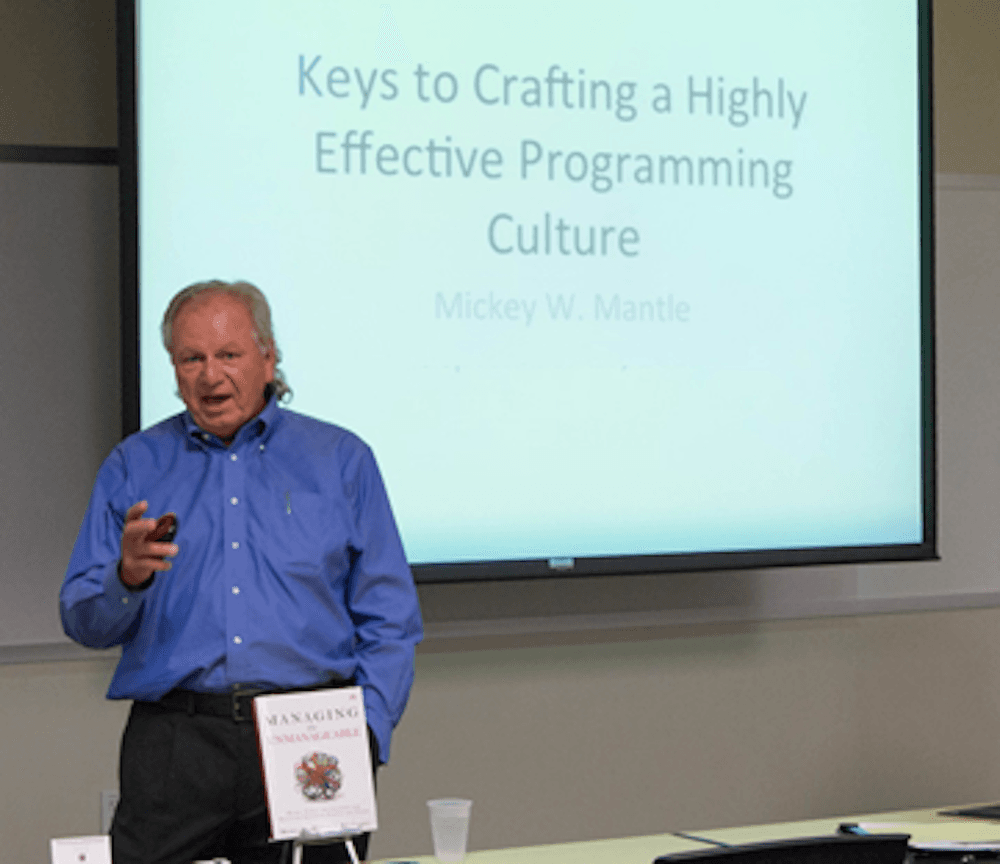
Mickey Mantle

Co-author:  Managing the Unmanageable and Founder/CEO Wanderful interactive storybooks

Focus. I have an incredible ability to focus on what I put my mind to and tune out the rest of the world around me.

Read the full interview
Mike Hansen

Head of Product Development and Engineering for Sonatype

I didn’t realize it until I read Tasha Eurich’s recent article about self-awareness on HBR, but I tend to ask “what” more than “why”. Instead of, “Why is this thing going off the rails?” it’s much better to ask, “What do we need to do to get this back on the rails?” As Tasha notes, the typical human inclination is to ask “Why?” and it tends to delay getting on the path to progress. “What?” leads to a bias for action versus analysis.

Read the full interview
Nat Fast

VP Software Development at Viscira

Acknowledging that I might be wrong on any stance I have. I cannot tell you the number of times I have misinterpreted a situation. It is important to clarify what is actually needed. This helps reduce crossed signals and aids in directional alignment with a correct response assessment.

Read the full answer
Natasha Vinnik

Senior Engineering Manager at Google

Flexibility. I adjust to different situations and different people I work with. I tend to be open to new ideas, take them, try them and iterate on them. I believe every person in the team is different and I take this opportunity to learn from everyone and adjust to what the team needs. Being flexible is the habit I rely on a lot.

Read the full answer
Oliver Plattner

VP of Engineering at Codecademy

Working out and trying to eat healthy. Both of these things provide a lot more energy and enable me to power through the day. Especially as the winter season is upon us, a lot of people tend to get sick and I’ve found this helps with avoiding all the colds going around.

Read the full interview
Patrick Joyce

Director of Engineering at Stitch Fix

Running regularly.

If I don’t take care of myself I can’t take care of my team. This is a lesson I’ve had to learn a few times, but that I’ve been pretty consistent with for the last 3 years.

Read the full interview
Pei-Chin Wang

Senior Director of Product at Redfin

I think learning to disconnect. Learning, to achieve higher performance is to disconnect, which counterintuitive. But I think earlier in my career, and every now and then I’ll do the same, I’ll just like work crazily for like a few days and like I will feel like, “Oh my God, I’m so productive. I am working 10, 12 hours a day, getting a lot done.” But then I think, at least for me, like biologically after certain hours, I actually don’t have the best quality thinking. And I actually need to disconnect, and step away from work for a good amount of time and actually bring new ideas and perspectives. And that has been something I am trying to…

Read the full answer
Poorani Jeyasekar

Delivery Lead for Celerity Consulting

I am diplomatic, and I drive. By drive, I mean I take initiative, I drive decisions, I drive for results, and then … I don’t know how to say this. It’s like, I’m intrinsically motivated. Like, nobody has to tell me that I need to do these things, I just do it. You could tell me that I need to take care of something, and I’ll just figure it out and I’ll get it done. That irrespective if its work or not, people really like that because they don’t have to tell me things twice. What is that quality? I don’t know what you call that.

Read the full interview
Randy Raw

VP of Information Security at Veterans United Home Loans

Yes. I think, I every day on my calendar, mine happen to be 4:30 in the afternoon, I schedule 30 minutes that just as daily thought time. When I’m successful at protecting that time, it allows me to get my head up out of the water, so to speak, out of the weeds of what’s happening with the daily grind of whatever’s happened in the business and look around at what else is going on. That’s when I’ll take time to listen to the podcast, some of the leadership podcasts that we’ve talked about or to go read articles, how can I be a better person, a better leader, that really understands big picture of what we’re doing. Having that daily time to…

Read the full interview
Raylene Yung

Head of Payments at Stripe

I’ve always been focused on learning, and increasing the leverage of how I spend my time. This has led me to seek advice from the people around me at all stages of my career, and adjusting who I try to learn from as my role has evolved. As an IC new grad engineer, I tried to learn everything I could from the more experienced engineers who sat next to me on my team. Now, I reach out to executive leaders at established or fast-growing companies to learn from them and exchange tips. Leverage can mean a lot of things, and applies to both my personal time and the time of my teams—working to increase leverage has caused me to push for internal…

Read the full interview
Raymond Lai Co-Founder

CTO of Mitterra Ecommerce Solutions and Author of This is Professional Services

Be a good human being. Smile. Be positive in the face of utter negativity. Just generally be a person that others can feed positive energy off of. As a leader, the team is acutely aware of team direction and organizational problems based on your behaviour. Being honest is important, but being positive allows people to realize that no problem is too big to tackle and take down as a team.

Read the full interview
Rich Archbold

Senior Director of Engineering at Intercom

A personal habit that contributes to my success is listening to audiobooks on Audible.com. I constantly have two audio books or different podcasts that I can flip between that are aimed at growing my knowledge or awareness around leadership, technology or history. I go through the equivalent of two to three books a month.

Read the full interview
Robby Russell

VP Engineering, Partner at Planet Argon, LLC

Tracking how much water I’m consuming each day seems to be helping.

As mentioned earlier, I start my day off by setting what my highlight of the day will be. During the week, it usually ends up being a company-related highlight…but there are occasionally personal ones, too. Sometimes, I need to focus on a few personal tasks during the middle of the day, so being intentional can be helpful.

Read the full answer
Ron Lichty

Consultant, Interim VP Engineering and Author

Saying “thank you.” I think it was all the way back in my first managerial role at Apple, I read a piece about the importance of saying “thank you” and stuck a note in my “to the office” folder to “Say thank you 12 times this week” and promised myself that every time I came across it I’d pause and think about who I owed a thank you to. I still think I under-thank. I still look at the note.

Read the full answer
Saminda Wijegunawardena

VP, Engineering @ Box

What is probably most unique for me is practicing mindfulness. Fifteen years ago I was doing hours of meditation a day. After becoming a husband, father, and taking on more responsibility, it’s fairly challenging to find that kind of time anymore. I try to do a little bit of mindfulness every day during the train ride and that kind of centers me. It builds self-awareness and a sense of how I’m actually feeling because it’s very easy for my personality to just getting in a state of constant doing versus a state of watching, and that is very impactful for me.

Read the full answer
Sanjay Zope

Director of Software Engineering, NationalMI

I spend time every day at work that leads to stronger relationships with colleagues. I take a genuine interest in listening to people, learning about their interests, situations that are affecting them in positive as well as negative ways. It helps me in having greater satisfaction with connections and has led to developing great friends at work.

Read the full interview
Shilpi Sanchetee

Engineering Manager at Slack

I am very organized and it contributes to my success. I exercise regularly and it’s like meditation for me. I will make sure I go to gym and get disconnected from my phone for at least hour or so a day. I feel energized and invigorated after and often notice lack of energy when I’m unable to exercise.

Read the full interview
Sol Rosenbaum

Director, Green & Energy Services at GRS Group

Reading a minimum of 10 pages per day. It often comes out to more than that, but this simple exercise will allow someone to easily read 10-15 books per year.

Read the full interview
Swaroop C H

Engineering Manager at Helpshift

I would say revisiting fundamentals often, has helped me.

As a manager, there are only 2 things that determine my performance – results of the team and retention (hiring). I focus on those.

Plus, I keep learning and unlearning what it means to be a good manager.

Read the full answer
Varsha Dudani

Engineering Manager at DoorDash

I am incredibly passionate about my job and a full supporter of my team. I know that their success is my success.

More specifically, I do everything I can to feed their passions and motivate them to continue creating their best work. I show them the impact of what they are doing, highlight their past success and point out where their hard work is paying off. I find that a motivated and happy team is more likely to produce great outcomes. To keep morale high, I believe that maintaining strong relationships and being nice always pays off. So my 2 cents here is – Be nice!

Read the full interview
Xing Chen

Senior Director, Software Engineering at Thumbtack

I at least triage everything that is direct messaged to me on email or Slack every day before I go to bed. It doesn’t mean I respond to everything but it does mean I’ve at least triaged and prioritized what I need to respond to. One thing to realize is that as a manager, part of your job is just to be a channel of information flow. If the information flow gets bottlenecked at you, that slows the entire team down. My policy is that if I want my teams to be moving fast, then I need to move fast and keep the information flowing.

Read the full interview
Yagiz Erkan

VP of Technology at Motive Retail

So, we’re talking about habits, and not skills. Hmm… It’s hard to limit this to a single one, so please forgive my picking three:

The first one is learning. I allocate time for learning activities outside of work hours. This usually materializes as reading articles or books, listening to talks, watching presentations and online training sessions, attending meetups or MOOCs. I’m a lifelong learner.

Read the full answer