Interview with Sanjay Zope, Director of Software Engineering, NationalMI
By Vidal Graupera · · 5 min read


Location: San Francisco Bay Area
Current role: Director of Software Engineering, NationalMI
What’s your background and how did you get into management?
I have 6 years of engineering management experience and prior strong engineering background. I started my career as Consultant for British Telecom, AT &T, Stanford Health & Apple. Earlier, I built products in telecommunications, computer-aided engineering, and education domains. Now, I work in a financial services company.
I have always enjoyed solving complex technical challenges and leading initiatives. As I grew in my career and took on lead roles, I enjoyed coaching engineers on the team and delivering higher value results. While working at Pearson, my manager asked me if I am interested to take on manager role and I happily accepted. To polish my project management skills, I completed “Project management professional” certification as well as studied MBA while working. I am very pleased about taking on managerial track as I enjoy delivering 10x more features than I could have possibly done as an individual contributor and supporting smart engineers in their career paths.
What are the biggest challenges you face?
Biggest challenges facing me are hiring talent and making organizational changes for the company moving into enterprise stage. The job market is hot and attracting talent is harder. It means that regular channels of hiring needs to be changed and network of influence needs to be broadened. Also, as a company, we are entering the enterprise stage and need to develop sustaining product development life cycles. So far, have led engineering teams that have gone through early startup to growth mode in the last 3 years.
What’s your approach to hiring?
I approach hiring based on whether the need is tactical or strategic. For tactical roles, I look for a consultant to fulfill the need. However, each year, I build a hiring plan that aligns engineering teams to strategic needs of the company. Typically involves, identifying right roles, building job description that is tailored to the specific role, developing interview panel and looking at interviewing as wholesome experience for candidate as well as the team. Hiring is primarily based on skill, culture fit as well as purpose. Hiring decisions are based on a collaborative assessment of the candidate from the panel’s feedback.
What’s your advice for managers who are just starting out?
Management is not a god gifted talent but a skill that can be learned. Learning is the key to getting better at management skill. It depends on the individual’s learning approaches. I learned it the best possible way by doing an MBA where I took courses on negotiations, effective communication, corporate finance & management in organizations. It helped me learn the toolbox and approaches to managing situations as well as people more effectively.
Another great way to improve the skill is through practice and observing great managers.
Do you think that it is worth to get an MBA as an engineering leader? A lot of people wonder about this.
For me, it was very useful, and I do feel that it is worth. As I am a learner at heart, I get very interested in knowing as much detailed knowledge I can about the topic that interests me. As I was starting out as a manager, I wanted to understand what makes someone a seasoned manager and what are the approaches to management that are well known. I wanted to be prepared to handle the situations and not second guess myself whether I was applying the right techniques of management. My employer was generous in sponsoring education, so it made it easy for me to join MBA classes while working. MBA taught me about toolbox (a set of skills that can be acquired through learning & practice) as well as various aspects of leadership roles. Due to the knowledge, I have been able to transition into the role much more effectively. It was hard for sure given that I did it while working full time. I had to sacrifice my time with family. I was able to do it well by building good friendships with my classmates and by connecting with people who are on the same path.
Some of the courses that were highly useful for me – “Dynamics of negotiations”, “Effective managerial communication”, “Entrepreneurship and Innovation”, “Management in organizations”, “Managing organizational performance”.
What’s your workday like and how do you manage your time, emails, etc.?
The skill of “organizing” is a key asset for a good manager. Workday is generally filled with tasks that involve managing multiple priorities and having limited time to fulfill them. I typically plan the day by looking at meetings and priorities. At the end of the day, I review the day’s activities and make notes for the next day’s plan.
To manage the chaos of tasks at hand and not losing sleep over missing important timelines, I use “daily plan” document that is organized as a table. Rows have categories, Important & Not important. Columns have categories, Urgent & Not urgent. I put items under a specific row/column to help me pick items in order of urgency and importance.
What’s a personal habit that contributes to your success?
I spend time every day at work that leads to stronger relationships with colleagues. I take a genuine interest in listening to people, learning about their interests, situations that are affecting them in positive as well as negative ways. It helps me in having greater satisfaction with connections and has led to developing great friends at work.
Share an internet resource or tool that you can’t live without.
I use the Safari online library that has quite good videos and books on technical as well as managerial topics. I also use Feedly as a collector of RSS feeds about topics of interests.
If you could recommend one book to managers, what would it be and why?
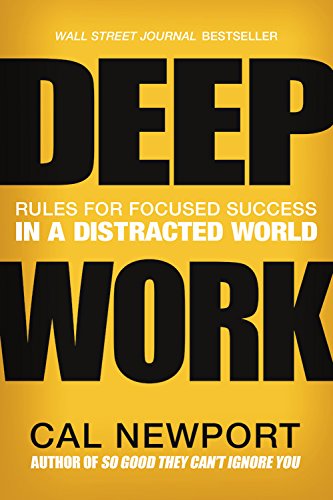
“Deep Work: Rules for Focused Success in a Distracted World” by Cal Newport. The book is about producing results at an elite level with quality and speed. Technology has been rapidly influencing all aspects of life. It is a need of information age for technocrats to quickly master hard things. Book is full of examples about how “deep work” practice has enabled people to make significant contributions in their lives.
What’s your approach to mentoring and coaching members of your team?
I approach supporting members of the team based on their familiarity with the topic. For members who are making a change in their career track or exploring a new skill, I like to mentor them. Sometimes, I help them identify the right mentor. When I mentor someone, I share my experiences and advise them of choices with their pros & cons. For members that are quite familiar with the topic but are struggling to improve, I rely on coaching them by telling less and asking more. I ask a lot of probing questions and help them to identify a path to take and choices to make.
Where can we go to learn more about you? (e.g., LinkedIn, Twitter, Blog, GitHub)
I mostly use the professional social platform, LinkedIn. Here is my profile page. LinkedIn
You are welcome to message me and get in touch with me. I would love to share my experiences and learn from you as well