Managers Club
All questionsCollected Wisdom

If you could recommend one book to managers, what would it be?

58 engineering leaders answered this question. Their responses, alphabetically.

Alexandra Paredes

Head of Engineering at Code Climate

For new managers, I recommend Resilient Management by Lara Hogan. What I like the most is that Lara shares very practical tips and frameworks that you can put into practice immediately. Actually, this book is good for all managers but familiarizing yourself with this concepts is particularly helpful when you’re starting out.

Also, I recommend reading Accelerate by Nicole Forsgren PhD, Jez Humble, Gene Kim is a great read on applying a scientific approach to engineering leadership and learning the skills to drive high performance.


Read the full interview
Andrew Mairena

MBA student at MIT Sloan School of Management (and formerly Application Engineering Manager at Thermo Fisher Scientific)

I was an Application Engineering Manager for a team that valued very technical expertise and EI, or emotional intelligence. To cultivate EI, my personal recommendation is a book titled ‘Leadership: The Power of Emotional Intelligence’ by Daniel Goleman. The book has a variety of chapters on certain aspects of EI and Daniel summarizes his findings on leadership. I would suggest it to all managers to really kind of think about the way they approach influencing others without authority, cultivating others, et cetera. This book covers a lot of different topics to help build out that aspect of leadership.

Read the full interview
Anne Hjortshoj

Manager, UX Research and Strategy, Cisco Cloud Security

I like The Hard Thing About Hard Things, by Ben Horowitz. It’s not really for people managers (it’s for executives), but I found it invaluable when the organization I was working in as a startup was growing quickly. It provided some insights into big business challenges, and how to grow an organization the right way. I’m also a fan of Managing Humans (Michael Lopp) and Org Design for Design Orgs (Peter Merholz and Kristin Skinner).

Read the full interview
Anthony Mazzarella

Director, Core Engineering at BAMTECH Media

I feel like the big dogs – e.g. Radical Candor and Managing Humans – are implied. So, I’ll go off the beaten path.

Setting the Table: The Transforming Power of Hospitality in Business by Danny Meyer. It has a cheesy title that sells an image of a restaurateur’s how-to. In actuality, it contains a warm discussion about servant leadership and the importance of human experiences. There’s certainly a business-focused thread that runs the length of the book, but Meyer never diminishes the importance of the people or the relationships that enable it.

Read the full answer
Anurag Maunder

SVP of Engineering at Kindred.ai

I like ”History of Western Philosophy” by Bertrand Russell. While a direct incentive-based management model works well with small teams it doesn’t work with larger teams. Everybody has different motivations and is in a different stage in his/her life. Philosophers all over the world have spent hundreds of years in understanding the basic human model. What motivates them, what makes them inquisitive and what terrifies them. This book is a great summary of human thought, its quest of learning models and cognitive evolution. Personally, this book gives me more tools than any other management book to understand how to organize teams to meet…


Read the full interview
Bella Kazwell

Web Engineering Lead at Asana

One book I’m currently reading is The Manager’s Path. I’m enjoying it so far, and I’ve heard both managers and reports like it because it describes how the relationship works well.

Read the full interview
Benjamin Encz

Director of Engineering at PlanGrid

If I have to stick to a single book I would say “Principles” by Ray Dalio the founder of the Bridgewater hedge fund. Whether or not you agree with the intense culture he has built at Bridgewater, the book contains a very dense list of management best practices, together with useful anecdotes. Most non-fiction books are too long for the information they convey. This is one of the densest and most valuable ones I’ve found on management.

Read the full interview
Brent Baisley

VP of Engineering at Ticket Evolution

Positive Intelligence by Shirzad Chamine. It helped me discover what my professional personality was so I could come up with a strategy to become better. It also helped me in “classifying” the personalities of those I managed so that I can help them come up with a strategy to reach their full potential. Sometimes it’s our environment holding us back, many times it’s ourselves that is holding us back.

Read the full interview
Chaitanya Atreya

Director of Engineering at Teradata

After having read, or skimmed through, a lot of business and management books, I see myself going back to one specific book. This is more of a reference book than a one-time read. My manager handed me this, and I have been hanging on to it for 2 years now.

The book is FYI: For Your Improvement, A Guide for Development and Coaching. FOR LEARNERS, MANAGERS, MENTORS AND FEEDBACK GIVERS.

Read the full answer
Chuck Groom

Director of Engineering at VTS

“Managing the Unmanageable” (2012, Mickey W. Mantle and Ron Lichty) is the best overall guide to being an effective software manager. It covers all the areas a manager needs to think about, and gives specific and proscriptive advice; no fluffy business-management-book BS here!

“Scaling Teams” (2017, Alexander Grosse and David Loftesness) gives very real-world, well-grounded advice about the practical problems a team will run into over time. If you’re at an early-stage startup or massively growing team, this is required reading.

Read the full answer
Daniel Dvorkin

Director of Engineering at Modern Tribe

There are so many that made an impact that it’s hard to pick one, but I’m going to go with Camille Fournier’s The Manager’s Path. Packed with good advice, ideas, and no bullshit. And the fact that each chapter represents another step in the, well… manager’s path, makes it immediately useful for anyone regardless of where they are in that path. It’s almost an encyclopedia of management.

Read the full interview
Dave Stachowiak

Host, Coaching for Leaders podcast

The Coaching Habit by Michael Bungay Stanier. A lot of leaders have been told, “be a better coach,” but coaching is one of those words that a lot of people use but haven’t really defined. Michael’s book is the best I know of on coaching, and he specialized in helping time-crunched managers easily coach in 10 minutes or less.

Read the full interview
Debjani Sarkar

Director of Engineering at Nuance Communications

I would recommend the HBR Ideacast podcast for those who enjoy listening. Each week there are insightful discussions and diverse perspectives that are helpful to form a macro view. At the end of the day, our leadership styles are reflections of who we are and what we believe in.

Read the full interview
Denali Lumma

Director, Software Development at Box

The book that I require all of the managers in my org to read is called The Effective Manager. It’s an old book, but it’s very straightforward, and it covers the foundation of what it means to be an effective people manager.

Read the full interview
Elena Tatarchenko

Backend Engineering Manager at DataFox

I find it helpful to understand better how people think and process information so I would recommend Thinking, Fast and Slow by Daniel Kahneman. More strictly management books I liked are Good to Great by Jim Collins and Peopleware by Tom DeMarco and Tim Lister. Each of those had made the point to not stand in the way of your best people but arm them with information and power to contribute.

Read the full interview
Erin Kidwell

Build, CI & DevInsights Manager at Netflix

I’m going to cheat and recommend two related books: Crucial Conversations and Crucial Accountability. As a new or experienced manager, both these books provide practical and useful tips on how to manage your team and how to encourage your team to self-manage.

Read the full interview
Eugene Bochkarev

VP of Engineering at Xero

Honestly, Vidal, I cannot recommend one book. I do believe in the different stages of your career you need a different book. When I started being an engineering manager “Peopleware”, this famous book was really helpful for me. That’s one book which helped me to understand how to be a manager, how you work for your team, how to organize your delivery with the team. That was really good. “Peopleware”, I really recommend for new managers.

Read the full answer
Federico Soria

Engineering Manager at Airbnb

For me it’s easy. Pragmatic Programmer, which is not about program managers but is the best sort of book that I ever read and I have re-read it twice already. Because it depends, it’s one of those books that depends on the stage of your life that you’re at it. It will speak to you in different ways. Which is kind of weird for an engineering book, but it’s about mapping sort of engineering practices to real world and you can become more efficient and be able to tell those patterns. Usually what an engineer would do is find a pattern, find solution is how do you apply that to the real world. And for me that’s being very crucial to understand…

Read the full answer
Gady Pitaru

Chief Technology Officer for Badger Maps

The last great book I read was “User Story Mapping” by Jeff Patton. Even though it isn’t a dummy’s guide to management, it is very much about collaboration, building great teams, and implementing sane product development processes. “Lean Startup” by Eric Ries is similar, because it’s basically considered one of the most important texts for it’s genre, but it’s about more than just how to run a startup, as it’s principles can be applied to how we manage our work and time as individuals as well. Yes, as a startup my company needed to focus on how to build the minimum to get the maximum value, but I also need to do that day-to-day in the…

Read the full interview
Gergely Németh

Engineering Manager at Uber

If I had to pick one, I’d probably go for The Manager’s Path by Camille Fournier. I believe that no matter where you currently are in your career, there is something new in there for everyone. Even if someone has already read it, it’s a good refresher on the challenges folks face in different phases of their careers.

Read the full interview
Hampton Catlin

Sr Director of Engineering, Rent the Runway

Don’t read management books, if you are a manager. If you aren’t a manager, go ahead and learn about them! I think it’s much better to learn about some other discipline or to learn about other modes of thinking. Every day you are learning to be a better manager. I put little stake into the conclusions of others, because if you want to really be better than anyone at managing, listen to people’s experiences, but avoid trusting their conclusions.

Read the full answer
Isabel Nyo

Engineering Manager, Technologist, Writer, Speaker, Mother

Find Your Why by Simon Sinek. It’s a book to help discover purpose for you and your team.

Speaking of books, I am currently writing a book but it’s not just for managers, but it is for anyone and everyone who wants to feel happy, successful and fulfilled in their career and life. Please subscribe to my mailing list if you’re keen to get a preview.

Read the full interview
Jeba Singh Emmanuel

Engineering Manager at Linkedin

A couple: The Manager’s Path and Influence Without Authority. These books were very useful for me and I still read specific chapters from time to time. The Manager’s Path is a very practical guidebook to terminology around management, challenges every manager runs into at some point, and notes on how to tackle challenging scenarios. It is an amazing book and a must-read.

Influence without Authority provides a set of non-intuitive frameworks that are useful in your toolbox as a manager.

I would also recommend Fred Koffman’s videos on Linkedin. His videos provide clarity that may redefine how you look at interactions in your daily workday.

Read the full interview
Jerry Li

Senior Director at Groupon

There are a lot of good books in different areas that can be useful to people out there, but one I like a lot that I read recently is Conscious Business: How to Build Value through Values by Fred Kofman.

He worked as a consultant and a professor. It goes back to the point I mentioned earlier. It’s really hard to teach self-awareness, and how to have common sense, not as an individual, but also as a team and organization. I think it’s very critical for any organization to be successful.

Read the full answer
John Van Heteren the

Director of Treatment Delivery Applied Research at Varian Medical Systems

I recommend Ron Lichty’s book Managing the Unmanageable: Rules, Tools, and Insights for Managing Software People and Teams in part because it is a good collection of bite-sized wisdom. Just like my previous point about binge-learning vs nibble-learning, the advantage of ingesting bite-sized concepts is that you can use those bites right away whereas many ideas learned from binging are lost because they are not immediately used.

Read the full interview
Kate Wardin

Senior Engineering Manager at Target

Radical Candor by Kim Scott. She is able to demystify the act of giving feedback, in my opinion, is one of the most important roles of a leader.

Read the full interview
Kimber Lockhart

CTO at One Medical

This is so hard. I have a whole bookshelf of recommended books. If I had to pick one, especially one that I have revisited in the last year, it’s Multipliers: How the Best Leaders Make Everyone Smarter. It covers growth in leadership, and how leading becomes less about leading, per se, and more about empowering other people to lead. It touches on how to create an organization in which others are enabled to make decisions and do their best work. If you’re lucky, eventually your visible role as a leader will dwindle down to giving an inspirational speech every once in a while, but you’re really doing tons of work behind the scenes to help…

Read the full interview
Lavanya Ramani

Software Development Manager at Amazon

I read this beautiful book actually from Kim Scott. She wrote this book called Radical Candor. It’s a great book. It’s written by Kim Scott, and she’s a success coach to various companies CEOs like Dropbox and Twitter and Google and Facebook. And this book is just so beautiful because it talks about why it is important to be transparent at work. Because as a leader, your communications have to be very clear for the team to be most productive. And this book brings out the best of how to communicate clearly, crisply, in a non-embellished way or in a non-flowery way to your team because your team is looking for constant feedback, and the team…

Read the full interview
Lei Yang

VP of Engineering at Quora

There’s a book that’s not management specific but I think anybody who wants a successful career and a happy life should read it. The book is called “How to Win Friends and Influence People” by Dale Carnegie.

It’s a wonderful book. I’ve read it a couple of times and every time I read it I always feel like I learned something new from it.

Read the full interview
Lena Reinhard

Director of Engineering CircleCI

I think a big portion of the ability to be a good manager is about being able to form deep interpersonal relationships and build trust. Brené Brown’s “Daring Greatly” builds on social research on and gives practical tools for self-reflection, as well as very good guidance for leaders for how to transform their own role, their teams, and organisations.

“Accelerate” by Nicole Forsgren (PhD), Jez Humble, Gene Kim, is a great look on how to practically apply research to building and elevating engineering organisations.

Read the full interview
Libor Michalek

President, Technology at Affirm, Inc.

You know what? The books I actually find the best about leadership and management are less directly about leadership and management, they’re more books where teams have come together to get something done – taking a large challenge and solving it. These books aren’t directly instructional about how to manage but give an insight into what’s possible. How different people have approached it, how they organize, how they actually got something done. At the end of the day, the purpose of it is impact. So seeing the impact, reading about the impact itself, and how they got there, is always an interesting lesson.

Read the full answer
Lior Gavish

Senior Vice President at Barracuda Networks

One of my favorite books, period and specifically when it comes to being a manager is Daring Greatly. It’s a book by Brene Brown. I think there’s also a TED Talk that she gave about the topic, but I really recommend reading the entire book. It basically talks about vulnerability and it explains in a very easy going way how vulnerability actually drives a lot of our behaviors and a lot of our actions. And generally speaking, there are two paths you can take. You could either let vulnerability take over you and prevent you from doing certain things and prevent you from saying certain things and prevent you from going through certain…

Read the full answer
Margaret Schmitt

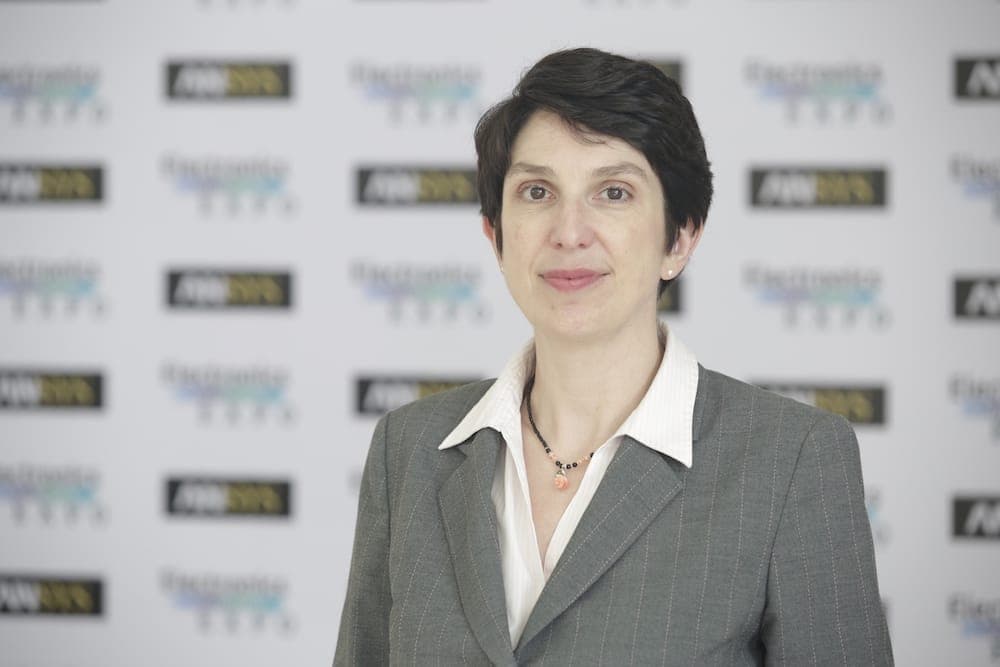
Senior Director of SBU Solutions Enablement at ANSYS

I highly recommend that anyone striving to become a better team leader, whether you are in a management role or not, should read Five Dysfunctions of a Team by Patrick Lencioni. Specifically, for women aspiring to become better leaders, this book helps readers learn to build trust in their team and also that constructive conflict is crucial to helping a team form the best decisions and move in the same direction. This is an important lesson to learn, as very often we perceive conflict to be negative, and may hesitate to speak up (or listen to) a differing opinion (especially in front of the team). This can lead to lack of ‘buy-in’ for the…

Read the full interview
Matt Newkirk

Engineering Manager at Etsy

First, Break All The Rules: What the World’s Greatest Managers Do Differently by Marcus Buckingham and Curt Coffman is a wonderful book for managers. I keep their 12 questions in mind when I think about team culture and happiness and keep that list handy in all of my note-taking systems. It also introduced me to the concept of managing for someone’s strengths rather than using performance management to highlight their weaknesses.

Read the full answer
Mickey Mantle

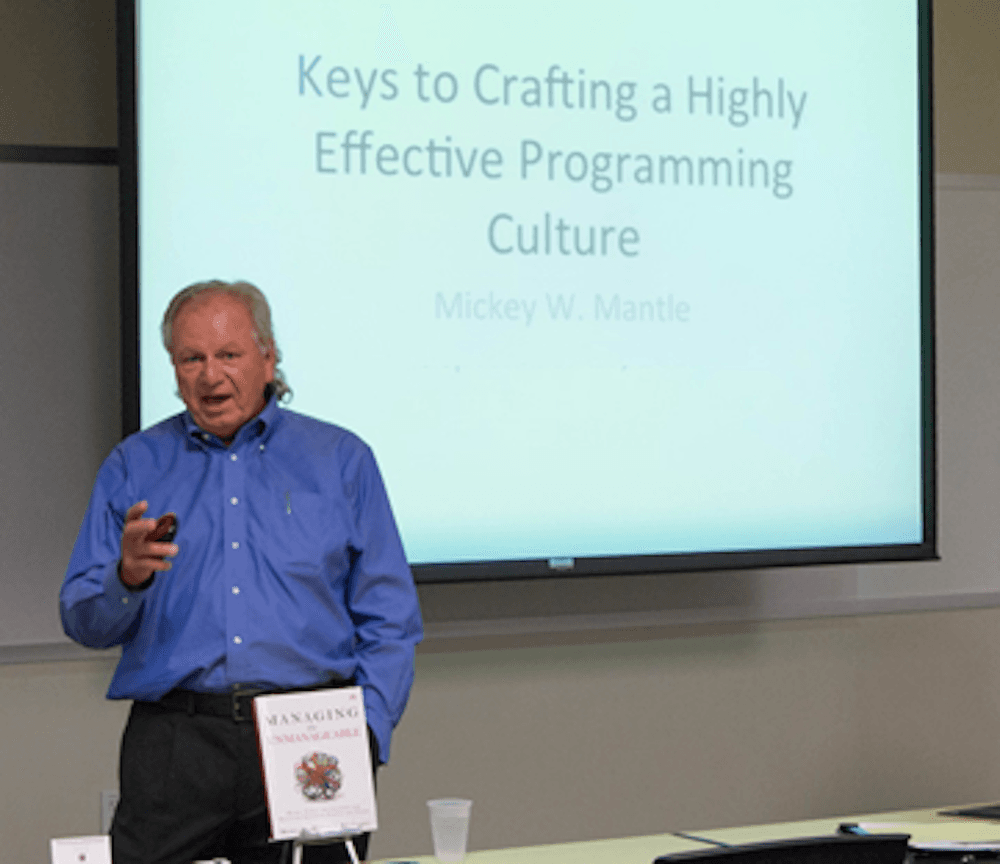
Co-author:  Managing the Unmanageable and Founder/CEO Wanderful interactive storybooks

The book Ron and I wrote, of course! But additionally, if I had to recommend just one book I would suggest that every manager read the book that inspired Ron and I to write our book – Fred Brooks’ The Mythical Man Month (silver anniversary edition). Though it recounts the creation of OS 360 – technology that is now over 50 years old – its lessons are still relevant today.

But of course, I wouldn’t recommend just one book. There are only a few books about managing technical people, and I recommend that any manager interested in mastering his/her craft get them all and glean as many insights from them as possible.

Read the full interview
Mike Hansen

Head of Product Development and Engineering for Sonatype

David Marquet’s “Turn the Ship Around” is a recent favorite. There might be some bias given my Navy experience with the broken command and control culture I suffered that Marquet confronted head-on, with incredible courage. This book is now (basically) required reading here at Sonatype because in dealing with complex domains, the book crisply explains that to be most effective, EVERYONE must lead.

Read the full interview
Nat Fast

VP Software Development at Viscira

Believe it or not, “Guns, Germs, and Steel” by Jared Diamond Ph.D. While not a management how-to, a sports hero bio or book about the long-standing career of some industry titan, it does illustrate the impact of small things upon every person. Things that are out of control that affect everybody’s life. We need to understand the issues that motivate and the personal experience that drives a person. I found the perspectives in this book truthful as it mirrored my experience with peoples from many cultures and the drivers of their decisions. This is especially true where there are cultural norms that can be offensive to others, when faced with…

Read the full interview
Natasha Vinnik

Senior Engineering Manager at Google

I would recommend Five Dysfunctions of a Team. It talks about the importance of a team, and how to focus on building an effective team. And I also like the style of the book because it first presents a relatable narrative then gives specific principles to follow which makes those principles easy to remember.

Another good book is “It’s Your Ship: Management Techniques from the Best Damn Ship in the Navy“. It talks about ownership and how to foster ownership and accountability. This book is great for everyone, not just managers.

Read the full interview
Oliver Plattner

VP of Engineering at Codecademy

Radical Candor by Kim Scott details tips and tricks for learning to be a manager. Some of the ideas are very obvious, but it’s important to be reminded of them on a regular basis. As humans, we tend to worry about hurting people’s feelings and responses to constructive feedback, which can ultimately lead to unpleasant surprises during the review process. Transparency and open communication are key. In the end, it is better to tell people early on that they aren’t performing well before recurring issues need to be escalated.

Read the full interview
Patrick Joyce

Director of Engineering at Stitch Fix

The Manager’s Path. The engineering managers at Stitch Fix do a book club and this was one of the books we read last year. Reading The Manager’s Path after 5 years of managing was a very similar experience to reading Code Complete after being an engineer for several years. Camille does an incredible job of articulating lessons that I had to learn through painful trial and error.

Read the full answer
Poorani Jeyasekar

Delivery Lead for Celerity Consulting

Peter Drucker’s Effective Executive is what I would recommend. I think the reason I would recommend people to read it is because it’s a really short book, and it talks about how knowledge management really happens in an organization. And Peter Drucker also talks about, what should a good leader really do, and why, and how to be effective and efficient when you’re getting things done. And it’s a really old book, I think he wrote it in the 1960s I guess. It’s been there for more than 25 plus years for sure. But it’s still relevant to what’s going on today and how people are leading today, especially with the technology and the distractions…

Read the full answer
Randy Raw

VP of Information Security at Veterans United Home Loans

Oh, there’s a guy named Todd Henry that wrote a book called Herding Tigers. I buy a copy of that and give it to every one of our new technical managers, because it’s not herding cats. He uses an analogy like cats can’t hurt you. Tigers can hurt you. Every one of us on our security teams have tigers. Really, really smart people that are really good at what they do. We often don’t feed them well. We don’t give them context around what they’re doing. We’ll be thinking out loud. They’ll think we just gave them a set of instructions to go do something and then they go do it. Then we come back and say, “No, why were you doing that? That’s wrong…

Read the full answer
Raylene Yung

Head of Payments at Stripe

I’ve never been much of a book-driven learner, and have typically learned the most from experiencing things first-hand and seeing things over time. I have started reading more management books recently, and really enjoyed High Output Management. It was particularly striking how many things still rang true despite how much has changed in technology since it was written. And, there was plenty that was so out-of-date it was just fun to read—for example, one chapter gives meticulous tips on how to maintain giant binders of printed out documentation to increase developer efficiency.

Read the full interview
Raymond Lai Co-Founder

CTO of Mitterra Ecommerce Solutions and Author of This is Professional Services

My previous employer got me into Patrick Lencioni’s series of business-related fables. They’re short reads and are super sticky. Each book gives you a new tool in your leadership toolbox that is easily understandable and implementable. My favourite book is called “3 Signs of a Miserable Job”, which recently changed its name to “The Truth About Employee Engagement: A Fable About Addressing the Three Root Causes of Job Misery”. I guess Patrick changed the name to be less negative, but the original name was so sticky and impactful. You can find it on Amazon here.

Read the full interview
Rich Archbold

Senior Director of Engineering at Intercom

The book I would recommend is Crucial Conversations, written by Al Switzler, Joseph Grenny, and Ron McMillan, because as a manager having high stake conversations with your people about their career are one of the most important things that you’ll do. If you get it wrong you’ll lose people’s trust, almost forever. This book gives many good tools, tips, frameworks and mindsets to help you do this well.

Read the full interview
Robby Russell

VP Engineering, Partner at Planet Argon, LLC

One of my favorites that I read in the past year was The Coaching Habit: Say Less, Ask More & Change the Way You Lead Forever by Michael Bungay Stanier.

It really helped me rethink how to approach my one-on-one meetings with employees. There are several tips on how to ask better follow-up questions, how to keep your mouth shut and invite people to speak, ways to communicate that you’re listening, not offering up unsolicited solutions, and following through on things for your people.

Read the full answer
Ron Lichty

Consultant, Interim VP Engineering and Author

Mine, of course. Managing the Unmanageable: Rules, Tools, and Insights for Managing Software People and Teams. There are fewer than a dozen books specific to managing programmers that we’ve been able to find that have been published since programming got started in the ’40s. Get them all!

Read the full answer
Rukmini Reddy

VP of Engineering at Abstract

I would definitely recommend Dare to Lead by Brené Brown. I love Brené Brown, I think she talks about human emotions like shame and courage and vulnerability, some of which I think in Silicon Valley, we’ve just…we’ve not actually done it, we’ve not been vulnerable with each other. It’s all about just work and progress and wearing this armor when we come to work. And, she talks about how leadership is not about winning or losing, but it’s having the courage to show up, knowing you cannot control the outcome. And, how you can build a support system and a squad around you to make sure you’re successful.

Read the full interview
Saminda Wijegunawardena

VP, Engineering @ Box

Maybe it’s somewhat controversial but I think most management books are not really good 🙂 I think there’s kind of a formula of most management books which are if someone has built a brand as a leader and they convey some fairly obvious platitudes like treat people well, build trust and things like that which could be condensed into a one-page document. The rest of the book is filled with anecdotes to fill a page count!

Read the full answer
Sanjay Zope

Director of Software Engineering, NationalMI

“Deep Work: Rules for Focused Success in a Distracted World” by Cal Newport. The book is about producing results at an elite level with quality and speed. Technology has been rapidly influencing all aspects of life. It is a need of information age for technocrats to quickly master hard things. Book is full of examples about how “deep work” practice has enabled people to make significant contributions in their lives.

Read the full interview
Shilpi Sanchetee

Engineering Manager at Slack

An Elegant Puzzle – Systems of Engineering Management. It’s simple, concise. I think it is \most\ useful to non-managers, proto-managers, newly minted managers, (and, well, bad managers) as a survey of contemporary thinking about engineering management in startup-like, growth-oriented technology companies. With one exception, I found the content uniquely accessible from the lens of a software engineer (or other individual contributor) who has trouble relating to the managerial lens without suspicion (which I once was).

Read the full answer
Sol Rosenbaum

Director, Green & Energy Services at GRS Group

It’s Your Ship by Captain Michael Abrashoff. I found his approach to leadership and management to be very useful and applicable.

Read the full interview
Swaroop C H

Engineering Manager at Helpshift

The First 90 Days. Because it clearly walks you through understanding the context and foci of management. Getting started on the right foot is important and this book will help with that. Look for “structured learning process” and “five types of conversation with your boss” in particular.

Read the full interview
Varsha Dudani

Engineering Manager at DoorDash

I think Sheryl Sandberg’s Lean In is important for both men and women to read. Its core message about women in the workplace resonated with me as a manager. It’s no secret that the tech industry has a gender parity problem. As the only female engineering leader, I try to help out in any way possible to build a community of women engineers, represent them in a diversity and inclusion council or just be a sponsor for their ideas as we all work towards making DoorDash an amazing place to work. It’s important to me that we hold onto our core startup values, even as we grow so quickly.

Read the full answer
Xing Chen

Senior Director, Software Engineering at Thumbtack

I actually prefer reading books about leaders rather than leadership. The books on leadership and management are kind of useful to learn some frameworks, but I’ve generally found books on leaders to be much more interesting in terms of giving a window into the challenges they had to work through. For example, I really enjoyed American Icon by Bryce Hoffman – it’s a fun read and quite the story of how Alan Mulally turned Ford around.

Read the full interview
Yagiz Erkan

VP of Technology at Motive Retail

There are many great management and leadership books, and it’s not easy to pick a single one. I quite like the novelized format of some of these books, and the first one that pops to my mind is Patrick Lencioni’s The Five Dysfunctions of a Team. It is an easy read. Its messages are very important but are easy to grasp.

Read the full interview