Managers Club
All questionsCollected Wisdom

What are the biggest challenges you face as a leader?

58 engineering leaders answered this question. Their responses, alphabetically.

Alexandra Paredes

Head of Engineering at Code Climate

Switching between tactical and strategic thinking can still be painful for me. Code Climate is a lean company and the engineering team is fairly small (8 full time engineers and a couple of contractors). We have 2 products, a growing customer base of over one thousand companies, and our system on any given day will receive and process over one million webhooks. We’re small enough that I’m still involved in some day to day processes that requires me to be very tactical, for example, weekly planning and working closely with Product to understand if projects needs to be re-scoped or priorities need to be shifted. At the same time, it’s my…

Read the full answer
Andrew Mairena

MBA student at MIT Sloan School of Management (and formerly Application Engineering Manager at Thermo Fisher Scientific)

I can tell you there are three challenges that I had to resolve. One was the range of experiences on the team. I had six direct reports. I can easily break them up into three groups of people: one was recent college graduates, the second was PhDs with two or three years of experience, and then the third group was the senior group, which were individuals with twenty to thirty years of industry experience. Being a first time manager, I had to figure out how to cater to all these different types of individuals. That was the challenge.

Read the full answer
Anne Hjortshoj

Manager, UX Research and Strategy, Cisco Cloud Security

I think a big challenge for any manager is to give feedback in a productive way. I try hard to not dictate a total direction, or to micromanage. Ideally, my job is to remove obstacles and to empower the people who work for me.

I want my people to eventually move up (and potentially be managers themselves, if that’s their goal); it’s important that I help them with any approaches that they need to improve, and to provide context that they might not have, at their level, on what’s going on in the org, and how they might need to modify what they’re doing in order to succeed.

Read the full answer
Anthony Mazzarella

Director, Core Engineering at BAMTECH Media

My company is in a period of hyper growth, both in terms of business and staffing. Throw in an acquisition by Disney, and things are really interesting right now. Funnily, it’s not the growth or change that’s a challenge, so much as their side effects. This has two facets.

Read the full answer
Anurag Maunder

SVP of Engineering at Kindred.ai

One of the biggest challenges I face is hiring. It requires sustained effort to source and bring on the right talent to help drive our research and product development forward. Once we’ve onboarded any new candidate, it is important to get on the same page about team and company-wide goals. Right out of the gate, we need to be aligned so that we’re all marching toward the same objectives across teams.

Read the full answer
Bella Kazwell

Web Engineering Lead at Asana

My two biggest ongoing challenges are likely relatable for many managers. The first challenge I face is coaching in general. Coaching is interesting and often very rewarding, but it can also be challenging to coach and teach without just telling a report what I would do or how I would handle a situation. Coming up with new ways to help a report come up with a framework to make their own decisions or come to an answer on their own can require some creativity and problem solving, but seeing the light bulb go off when they come up with the solution on their own makes it worth it.

Read the full answer
Benjamin Encz

Director of Engineering at PlanGrid

Some of the biggest challenges I face are, I believe, the typical ones you see at growing engineering organizations.

Read the full answer
Brent Baisley

VP of Engineering at Ticket Evolution

Strategic thinking over tactical thinking is probably one of the biggest. I’ve seen this across multiple companies. When there is pressure to get things done and so many things to do, we focus on getting things done. We feel productive because of our output. In reality, we’re being tactical and not very effective. Every battle is being won but the war is being lost. Teaching people to think more strategically, to optimize for what we don’t do is a big challenge. Telling people to stop focusing on being productive and focus on being effective is a very different perspective. It takes a bit to sink in. At startups with limited resources, it’s…

Read the full answer
Chaitanya Atreya

Director of Engineering at Teradata

At Teradata, we are going through a phase of rapid growth and change. There is a constant challenge of hiring for emerging markets, and hiring the right talent. We are betting on some of the cutting edge technologies in the industry, and it gets increasingly hard given the market demand for such talent.

Read the full answer
Chuck Groom

Director of Engineering at VTS

Hiring senior engineers is our biggest challenge – in particular, keeping the top of the funnel full with sourcing and qualifying leads.

Read the full answer
Daniel Dvorkin

Director of Engineering at Modern Tribe

I’m going to be very unoriginal here, but recruiting is still one of the biggest challenges and frustrations I face. It’s a very competitive market and finding the right person at the right price at the right time is a delicate process that not always works like one would want.

A happier challenge is leading a completely distributed/remote team. There needs to be a lot of attention over communication and expectations to make sure the team is happy, engaged and efficient. Building trust and common culture across the team is more difficult and involved. I find this to be one of the most interesting parts of my job.

Read the full interview
Dave Stachowiak

Host, Coaching for Leaders podcast

The number of challenges. There aren’t many things in leadership that someone hasn’t figured out or that a whole lot of people haven’t figured out.

Here’s an example: How to delegate. That’s something that if you do a Google search on, you’ll find lots of great articles, courses, videos on how to delegate effectively. But the challenge is, oftentimes you don’t recognize when you need that skill — or if you do, there’s not someone to directly coach you on it.

That’s just one of the hundreds of things that a leader has to be thinking about on a daily basis.

Read the full interview
Debjani Sarkar

Director of Engineering at Nuance Communications

Over the years, I have learned to embrace challenges and work hard to overcome those! There are challenges in bringing together largely distributed teams to collaborate effectively and efficiently towards specific goals and deliverables. I work and lead global teams and this challenge is very real for me.

Read the full answer
Denali Lumma

Director, Software Development at Box

I think it’s constantly changing. One of the things that I’ve had to learn, and relearn, is how to be open, ready and willing to meet the business where it is. When you join a company as an engineering leader or you’re promoted into the role internally, you may have certain expectations. You may have certain idealized perceptions of how things should be, and this is just not reality.

Read the full answer
Elena Tatarchenko

Backend Engineering Manager at DataFox

This is not a unique problem, but we have a lot more work than engineers. The challenge then is prioritizing and sometimes saying no to customer asks. Engineering sits in the middle of many product stakeholders and they each make a case for their particular features and it’s hard to be objective about what to prioritize. You can drive yourself mad trying to figure out how to evaluate your options and the possible consequences. To top it all off, in the end, you still often don’t know if you made the right decision. It’s hard to be truly data-driven when evaluating subjective features. For example, I know I’m personally biased against…

Read the full answer
Erin Kidwell

Build, CI & DevInsights Manager at Netflix

Balancing the needs of users and their feature requests, improvements and bugs with the demands of scalable and reliable infrastructure. Just when you’re ready to spike a new, long-requested enhancement to your product for engineers, you learn there’s a competing request for your team to invest their time in a new security, platform, or data requirement. This challenge presents a dual opportunity for alignment and to improve my strategic planning skills, so I try to look at each of these cases as a chance for the team to learn something while also delivering incremental value to our users.

Read the full answer
Eugene Bochkarev

VP of Engineering at Xero

I think for a different stage of your career, you’ll have a different challenge, but I would still say the most typical one in the Bay Area, is hiring. Hiring in Bay Area, with current compensation layout is extremely hard. You compete with large corporations, which can provide double of compensation your smaller company can afford. That’s a challenge. If we can talk later about the hiring I have specific examples how I did it. I think I did pretty successful hiring in some companies.

Read the full answer
Gady Pitaru

Chief Technology Officer for Badger Maps

The biggest challenges I currently face mostly have to do with scaling. We are a fast-growing company, so it feels like we never have enough people to do everything we need to be doing. We’re forced to focus on just the highest priorities at any given moment, but we seem to have a lot of those right now. Some old technical debts are overdue for payback and have been sent to the collections agency. I remind myself to breathe and that it’s a good thing to be in this position, as not only is growth good but staying bootstrapped has forced us to learn discipline that is also good for building and growing a healthy company. We made huge progress…

Read the full interview
Gergely Németh

Engineering Manager at Uber

Probably one of the biggest ones is communication, for a few reasons. First of all, internally we support hundreds of product teams, with extremely different requirements. It’s hard to efficiently communicate with all of them – sometimes it feels more like broadcasting, but I’d prefer a dialogue. Then there is the question of over-communicating versus under-communicating – and not just towards the product teams, but team members too. It’s a really fine line and hard to get right – I usually err on the side of over-communicating.

Read the full answer
Hampton Catlin

Sr Director of Engineering, Rent the Runway

As far as being the best leader I can, I’d actually say my social anxiety is my biggest challenge! I come off as a very outgoing and talkative kind of person, but I’m just really good at hiding it and overcoming it. It’s simply that social interactions slowly grind me down over a day, so I have to carefully manage myself and try and grab moments of solitude and introspection in between being social. Because managing is interacting with people! I’ve met some managers who can have 1:1’s back to back for days at a time, but I find I can only do 2-3 a day.

Read the full interview
Isabel Nyo

Engineering Manager, Technologist, Writer, Speaker, Mother

My biggest challenge is always thinking about and balancing the three factors in software development; time, quality and cost. It would be great if we can have all three but the reality is that we need to make trade-offs all the time in software development. As an engineering manager, it’s my job to 1) make sure my team and I are aligned on the decision we make and 2) communicate effectively with the business and stakeholders so they understand why we make certain decisions and get their full support. It is a tough challenge but it makes my job interesting so I like it.

Read the full interview
Jeba Singh Emmanuel

Engineering Manager at Linkedin

I enjoy knowing the details of everything I touch. I spend a lot of time understanding the technology, the product, and what others are working on since I am naturally curious about the details. But, as a manager, you’re not always able to maintain that close of a view on all of the specifics. While I wish I had more time to do so, I solve this challenge by trusting the team to be great at these details and being choosy about the areas I take a deep dive into.

Read the full interview
Jerry Li

Senior Director at Groupon

My biggest challenge is to teach people self-awareness. It’s really, really hard. I think self-awareness is the foundation for any self-growth. Very often people don’t clearly know their areas of improvement and have a victim mindset. When you sit down with them and tell them they have something to improve, they become defensive and that often leads to a hard conversation.

Read the full answer
John Van Heteren the

Director of Treatment Delivery Applied Research at Varian Medical Systems

One of the challenges that Engineering Leaders face in the Medical Device industry is that some of the engineering management best practices, especially those relating to Scrum and Agile development, need to be adjusted for the world of regulated medical device development. The FDA does allow a variation of Agile project management methods, but they audit us as if it was a waterfall development. In order to create the required “Design Input” and “Design Output” documents, Engineering Managers have to create and follow a development process that is the best trade-off between Agile best practices and what the FDA allows.

Read the full answer
Kate Wardin

Senior Engineering Manager at Target

Time management – I have a very large team which requires me to interface with many different business partners (in addition to the most important roles of my job; supporting and advocating for the Engineers).

I have found various ways to overcome this – prioritizing 1:1s as non-negotiable or movable meetings, continuing to invest in my communication skills, and delegating as much as I can.

Read the full answer
Kimber Lockhart

CTO at One Medical

Team organization. Instead of having a front-end and back-end team or even teams focused on different areas of the product, we built teams that match to the experiences of people using their software. For example, there’s a Provider Experience team that is focused on the experience for doctors. There is another team that’s focused on the experience of One Medical members. This system largely works today, though it does require extra coordination between teams when multiple experiences converge in a single part of the product or codebase. I expect that as we scale we’ll need to figure out creative ways to get the benefit of having teams that…

Read the full answer
Lavanya Ramani

Software Development Manager at Amazon

That’s a great question, Vidal. There are many challenges that the manager faces. The biggest challenge that I face is to find the balance between retaining the top talent, with extremely good technology, forward-looking features for the product, and managing the technical debt in the team. This is one of the biggest challenges that I always have faced, but a manager has to find that right balance of getting those roadmap items ahead, how to get the top talent to work on the roadmap items, how to motivate the team to believe that they are working towards a great product that’s going to be used by millions and billions of people around the…

Read the full answer
Lei Yang

VP of Engineering at Quora

Managing a large engineering team and trying to scale and grow that team is one of the biggest challenges for me. That includes recruiting top talents, setting up the right structure and process, bringing and enforcing the right culture, building a healthy relationship between engineering and other functions, and very importantly, grooming and coaching a strong bench of engineering leaders.

Read the full answer
Lena Reinhard

Director of Engineering CircleCI

Time zones are definitely difficult for me. They are specifically an ongoing challenge for our globally distributed teams. And helping them make sure their processes are set up sustainably, and supporting them in developing a good mix of asynchronous and synchronous collaboration and communication practices, is a big part of my work.

Read the full answer
Libor Michalek

President, Technology at Affirm, Inc.

Communication. As you scale, people will take away different things when somebody gives a direction or provides context. When somebody helps to set direction. We always, all of us, take away a little bit of what, not just what is being said and what is being communicated, but what we want to hear, what we wish was being said. That can lead to discrepancies between what was intended and what was received.

Read the full answer
Lior Gavish

Senior Vice President at Barracuda Networks

Sure, so two things come to mind. The first is actually, I think one of the key things that I learned is that teams and especially good ones are made up of very different people with varying degrees of skills and various personalities and various ways of doing things. And I think one of the things that I keep trying to do and it’s challenging, is to figure out how to make everyone as successful as they could possibly be. And that means that I work with every person a little bit differently and focus on what motivates them and how they like to work and the type of projects where they would shine and so it’s just trying to learn that. A lot of…

Read the full answer
Margaret Schmitt

Senior Director of SBU Solutions Enablement at ANSYS

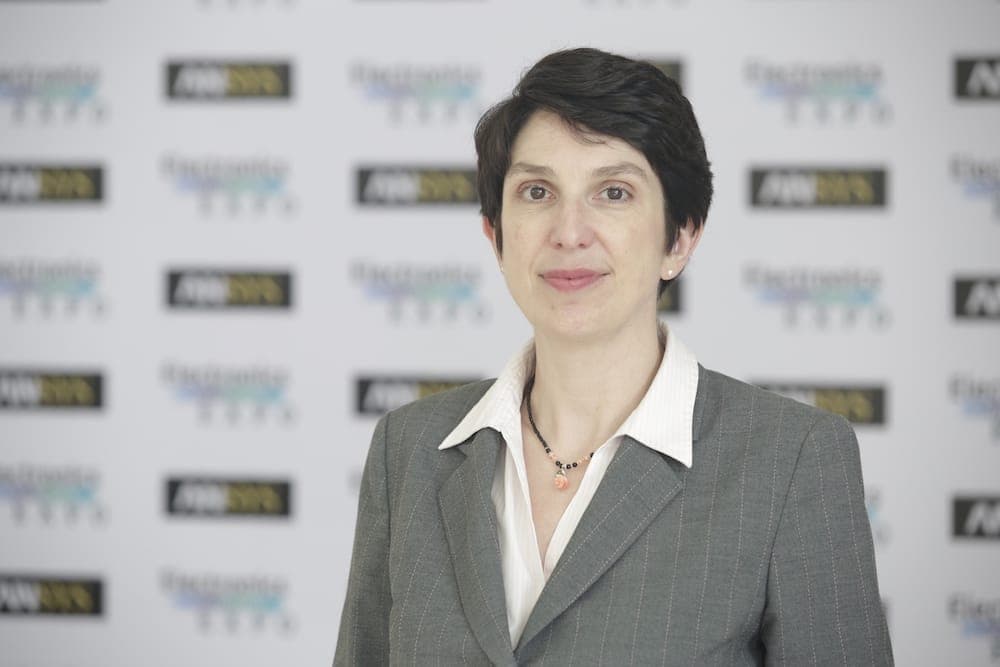
Being a woman in technology, there is still the perception that women represent the sales and marketing side of the business, but not the technical expertise. I am a technical expert – and while I may sometimes be the minority of a room, I always strive to make my voice heard.

Read the full interview
Matt Newkirk

Engineering Manager at Etsy

As an individual, the biggest challenge I face is finding time on my calendar for action items. I’m directly responsible for 14 people and indirectly responsible for another 5. Narrowing my focus to make time for each of those individuals is my daily struggle. Fulfilling my responsibilities to my team, my boss, my peers, and being home for dinner is tough but manageable.

Read the full answer
Mickey Mantle

Co-author:  Managing the Unmanageable and Founder/CEO Wanderful interactive storybooks

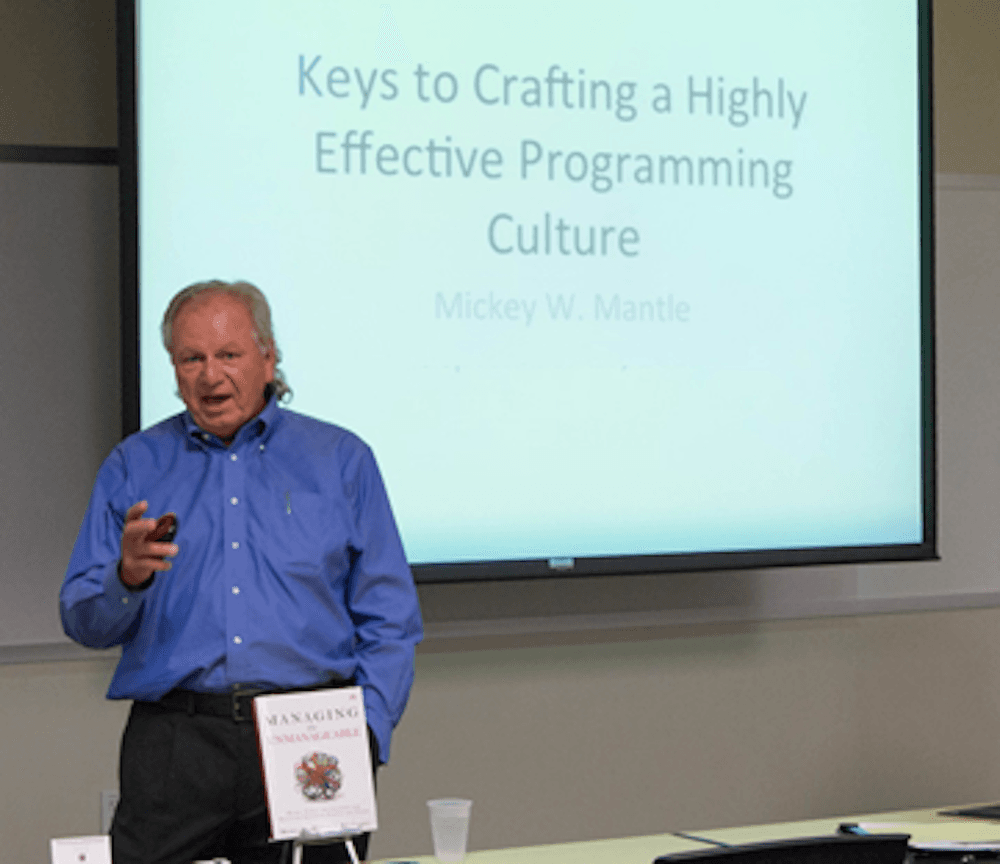
My career has been spent on the “bleeding edge” of technology and entertainment.

Starting with E&S, our customers included many different industries (University R&D centers, Aerospace, Automotive, Pharmaceutical, etc.) but it was the early 3D special effects companies like Robert Abel who really made me excited. I worked with them closely to help them get the most out of our equipment, which was used to make special effects for the original TRON and Star Trek movies.

Read the full answer
Mike Hansen

Head of Product Development and Engineering for Sonatype

We have been materially scaling our fully remote organization, roughly doubling in the last year and a half. This degree of change and the adaptations required are always challenging. We also strive to provide new opportunities to existing people before resorting to hiring, and many of these have been leadership roles. Moving from individual contributor to supporting individual contributors is a huge shift. Thankfully, we’ve also matured our ability to effectively support these leaders, many of which are new to the discipline.

Read the full answer
Nat Fast

VP Software Development at Viscira

The biggest challenge I face is getting people to be humble enough to accept their mistakes and move forward. It takes a lot of coaching to get people to drop their pride. To realize that it is not a competition, but a collaboration.

Read the full answer
Natasha Vinnik

Senior Engineering Manager at Google

There are a few common challenges that engineering leaders face. Whenever you are working on a feature, it is essential to understand customer base. Ideally, you want to avoid building one-off solutions that will only work for one customer but wouldn’t be applicable to other customers without a significant redesign. It is also challenging to find a right balance between a strong technical foundation that can easily be extendable but not over designing for potential future use cases. It sounds pretty simple -don’t complicate things. But in reality it’s challenging to spot those extra complexities.

Read the full answer
Oliver Plattner

VP of Engineering at Codecademy

Working at a rapidly growing technology company makes for a fast-paced, ever-changing work environment. Hiring and communication are major priorities for me, so at times it can be challenging to find the perfect market fit.

Startups have to make strategic moves in a timely manner. Making sure that we communicate often and early isn’t always easy, but transparency is crucial for me and the company as a whole. Establishing trust and communication is how we continue to grow our team and ensure we are hiring the best of the best.

Read the full interview
Patrick Joyce

Director of Engineering at Stitch Fix

The vast majority of my current challenges have to do with growth. We don’t have crazy technical scaling challenges like early Twitter, but we do have an incredible breadth of software we build and our team is growing really quickly.

Because we’re growing so fast a lot of people are coming up to speed at the same time. Simultaneously, we need to evaluate how we plan, communicate, and work together as a team. What worked great when we were 30 engineers would be a disaster now that we’re ~120. How we built our first 30 services starts to show some strain now that we’ve got ~90 services.

Read the full answer
Pei-Chin Wang

Senior Director of Product at Redfin

Yeah, it actually evolved as my team got bigger. I think at the beginning when I was managing a few people, the biggest challenge is to think about how do I help them grow and consistently deliver good results? How do I set what good looks like to them? And figuring out how to describe it as concrete as possible but still giving them to run, it’s that balance that at the beginning of my management career I need to balance.

Read the full answer
Poorani Jeyasekar

Delivery Lead for Celerity Consulting

One of the challenges that I face is keeping the people focused on the work that they’re doing and teaching them how to influence. Sometimes the work we do is non value-added work, which eventually turns into value-added work. I’m using continuous improvement terminology, if that makes sense to you.

Read the full answer
Randy Raw

VP of Information Security at Veterans United Home Loans

Yeah, so there’s really two. One is delegation. It’s really being clear about what I want to delegate and then helping the person understand, make sure that they’re able to repeat back what I need done. For me, information security is a very broad category. I have everything from vendor management and IT audit down to daily incident response and threat hunting and policies thrown in with that as well. Making sure that the individuals who are doing that specific technical work really understand what I need to have done and by when and establishing clarity around that is the biggest challenge.

Read the full answer
Raylene Yung

Head of Payments at Stripe

Managing through change. I’ve been lucky enough to work at two companies that have seen tremendous growth—I saw Facebook grow from seven hundred to over ten thousand employees, only to then join Stripe and watch it grow from two hundred to over a thousand. Constant growth means needing to adjust to constant change, and helps you develop a good intuition for putting processes or systems in place that can do the job you need now, but also not become too rigid or limiting as you grow.

Read the full answer
Raymond Lai Co-Founder

CTO of Mitterra Ecommerce Solutions and Author of This is Professional Services

The biggest challenge I face is really myself. A lot of the time I step back and question if what I’m doing is leadership, and what I should be doing to really benefit and lead the team. That mentality has paralized myself a many times, and I found the most effective way to beat that funk is to reach out to my mentors and peers to just talk things out. Sometimes I get inspired, others I feel validated, but 100% of the time I find myself ready to tackle the next challenge.

Read the full interview
Rich Archbold

Senior Director of Engineering at Intercom

I’ve been lucky enough to work for companies that grow fast. They hunt for really strong managers and engineers that align to the company’s culture and way of thinking. Hiring continues to be my number one challenge– the market is hot so there is a general shortage of people. It’s a constant struggle to attract the right people. At Intercom, we don’t “hire at all costs.” We are really focused on building out the team and hiring the right people who can do great things with you and have fun doing it.

Read the full interview
Robby Russell

VP Engineering, Partner at Planet Argon, LLC

Recruitment over the last few years has been a big challenge for us. While we’ve made some great hires, we find it difficult to recruit more senior developers. We can’t quite afford to match salaries of larger tech VC-backed companies based on the west coast.

Another challenge is finding developers that enjoy making existing things better (vs. shiny new things). There are plenty of developers that throw around, “we need to rewrite” or “we need to rebuild.” It’s not as easy to find the developers that find enjoyment diving into a bit of a mess and helping to untangle it.

Read the full answer
Ron Lichty

Consultant, Interim VP Engineering and Author

The biggest challenges I face are, I suspect, shared by most of us who have reached a senior level of engineering leadership: we have to find ways to help the rest of the executive team – non-engineering company leaders – understand our organizations. And we have to expand our own perspectives to grok the general management perspective that’s more than just developing new technology – our only shot at getting trust and confidence from our peers in other functions is communicating a balanced cross-functional perspective. Stepping up to be part of the senior team means collaboration is essential, but now the partners with whom we’re challenged…

Read the full answer
Rukmini Reddy

VP of Engineering at Abstract

I think it’s just the state of hyper-growth startups these days. You face tremendous challenges and I think this is very common in Silicon Valley, especially in very dynamic marketplaces, of keeping your team motivated, engaged, driving through with the same success factors. Marching to the same North star, that’s a challenge most of us leaders face.

Read the full answer
Saminda Wijegunawardena

VP, Engineering @ Box

My current challenges are probably shared by other leaders in the tech area and in Silicon Valley and are still the same challenges as many years prior: finding good people quickly (hiring). The talent market has become much more and more competitive. Keeping the culture bar high, the talent bar high, and just trying to find the right fit, and a mutual fit for folks to join my team and organization, it takes more energy than ever before.

Read the full answer
Sanjay Zope

Director of Software Engineering, NationalMI

Biggest challenges facing me are hiring talent and making organizational changes for the company moving into enterprise stage. The job market is hot and attracting talent is harder. It means that regular channels of hiring needs to be changed and network of influence needs to be broadened. Also, as a company, we are entering the enterprise stage and need to develop sustaining product development life cycles. So far, have led engineering teams that have gone through early startup to growth mode in the last 3 years.

Read the full interview
Shilpi Sanchetee

Engineering Manager at Slack

In startups and companies like Slack, you often see hyper growth and evolving cultures. It’s very hard to maintain the culture of a company and teams as they grow – I found myself facing challenges with ways to find alignment in how we used to do things and how we need to evolve as the company and our scale grows. Finding ways to make the team adept to change and grow alongside it.

Read the full interview
Sol Rosenbaum

Director, Green & Energy Services at GRS Group

Workflow and scheduling. Due to the nature of our business, some of the engineering work will be performed one week after engagement while other projects have work flowing in three weeks after engagement. This can make it difficult to plan our work schedule and assign projects efficiently.

Read the full answer
Swaroop C H

Engineering Manager at Helpshift

In my current job, engineering is split between two offices, and hence the challenges of remote offices are front and center for me.

Given the trend of remote offices and distributed teams, I feel this would inevitably part of the way we work in future, just like open offices (for better or for worse).

Read the full answer
Varsha Dudani

Engineering Manager at DoorDash

At any new job, the biggest challenge is working to prove yourself. This is especially true for managers who need to do this at every stage of promotion and it can be tough to showcase your value in a new capacity. However, working hard is not something I fear and I believe that good work will always speak for itself.

Read the full answer
Vishal Saxena

VP Global SaaS Operations at Aktana

One of the biggest challenges is that many still struggle to accept change. See, change is inevitable. It’s going to happen and sometimes you need to take a step back and understand why the change occurred and try to be in the shoes of other people. But at times it’s hard to accept and I’ve been in those shoes where it was very hard for me to accept that change. But what helps is to take a step back and see from other’s perspective, I then tried to motivate myself. Once you’re able to do that, you’re able to motivate others within your team. If you don’t agree with the change don’t stick around, it’s not good for them, it’s not good for you.

Read the full answer
Xing Chen

Senior Director, Software Engineering at Thumbtack

Thumbtack is in an exciting phase where we are building out an incredibly complex and deep consumer product, while also building the team at the same time. There are big and interesting challenges on both of these fronts.

Read the full answer
Yagiz Erkan

VP of Technology at Motive Retail

At a personal level this question is part of my ritual. Every 6 months or so, I ask myself a couple questions. This gives me an appreciation of how I have evolved. For instance, 10 years ago I would have told you my personal challenge was “patience”. Today, my challenge is finding the suitable ways to develop the managerial effectiveness of some of my people.

Another current challenge of mine is to strike the right balance in the number of our remote and local software developers. Not surprisingly I have to deal with competing priorities and many variables.

Read the full answer