Interview with Raylene Yung, Head of Payments at Stripe
By Vidal Graupera · · 5 min read


Location: San Francisco
Current Role: Head of Payments, Stripe
What’s your background and how did you get into management?
I first joined Facebook after completing my MS at Stanford in theoretical computer science and AI. I started off as an individual contributor, but transitioned into engineering management after realizing how much I enjoyed leading projects and helping other engineers develop. I got some early exposure to management even as an IC—I was a tech lead on News Feed where I worked on a rewrite of the product and internal API infrastructure, I mentored bootcamp classes, and led the women in tech community. Throughout my 6 years at Facebook, I contributed to the redesign of multiple platform infrastructural systems and worked on core product areas such as News Feed, Timeline, Privacy, and Sharing.
After leaving Facebook in 2015, I joined Stripe to lead their product engineering team, and as Head of Product also supported and grew the original product management team. Later on, I transitioned to become the Head of Payments, where we’re building the products and internal services that power Stripe’s global payments platform. As a member of Stripe’s leadership team, I contribute to areas such as company growth planning, engineering org leadership, working with strategic users and partners, and overall product strategy.
I think the role of an engineering manager is a unique and highly impactful one—you get to combine working on technical systems with supporting people and enabling them to do their best work. At an engineering-driven or technical product company, you also get to combine this with thinking through product and business strategy, and influencing the company’s bottom line.
What are the biggest challenges you face?
Managing through change. I’ve been lucky enough to work at two companies that have seen tremendous growth—I saw Facebook grow from seven hundred to over ten thousand employees, only to then join Stripe and watch it grow from two hundred to over a thousand. Constant growth means needing to adjust to constant change, and helps you develop a good intuition for putting processes or systems in place that can do the job you need now, but also not become too rigid or limiting as you grow.
Balancing engineering quality against business need. With high-growth companies, your user base and product surface area only grows more demanding over time. There’s always a tradeoff to be made between building the next big feature and taking time to go clean up the last system or product you launched.
What is your approach to hiring?
Have clear explicit goals for what you are looking for—this informs the recruiting targets you want to set and profiles you’re looking for, and can help refine your rubrics and hiring criteria. Don’t forget to focus on the candidate experience as well; by giving everyone equal access to information, you can even the playing field and help people feel more prepared and show their best work.
What’s your advice for managers who are just starting out?
Don’t rush to become a “people manager” too quickly, especially if it comes at the cost of deeply understanding the work and daily technical problems your teammates are facing. I find that the best new managers are able to build off a solid technical base, and can jump in to help with technical issues when the team really needs it. Also, unfortunately, you can’t really rush through learning the people side of things. Some lessons and skills can only really hit home after you have experienced them first-hand, such as performance management.
Whats your work day like and how do you manage your time, emails, etc.?
I have a broad and varied schedule given my current set of responsibilities, the large size of my team (over 150 engineers), and being a part of the company leadership team. I split my time across a few areas: supporting my teammates through 1-1s and whatever they may need help with, contributing to product and business strategy through reviews and discussions, developing and hiring for the team, contributing to engineering-org wide initiatives, and working on deep-dive topics that relate to the current company priority areas.
What’s a personal habit that contributes to your success?
I’ve always been focused on learning, and increasing the leverage of how I spend my time. This has led me to seek advice from the people around me at all stages of my career, and adjusting who I try to learn from as my role has evolved. As an IC new grad engineer, I tried to learn everything I could from the more experienced engineers who sat next to me on my team. Now, I reach out to executive leaders at established or fast-growing companies to learn from them and exchange tips. Leverage can mean a lot of things, and applies to both my personal time and the time of my teams—working to increase leverage has caused me to push for internal productivity efforts (e.g. better documentation, tooling, and automation) or technical projects (e.g. rewrites we did for News Feed and privacy at Facebook, architecture investments we’re making at Stripe).
Share an internet resource or tool that you can’t live without.
I love Google tools. For both my personal and professional projects, I do everything using a combination of email, slides, docs, and spreadsheets, easily cross-referencing them and using collaborative editing.
If you could recommend one book to managers, what would it be and why?
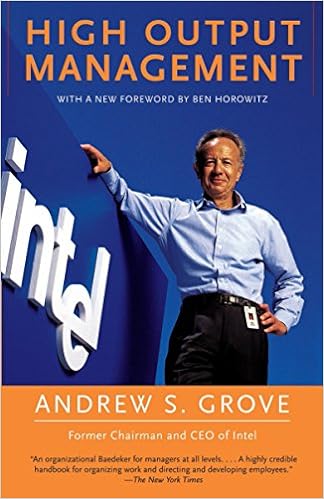
I’ve never been much of a book-driven learner, and have typically learned the most from experiencing things first-hand and seeing things over time. I have started reading more management books recently, and really enjoyed High Output Management. It was particularly striking how many things still rang true despite how much has changed in technology since it was written. And, there was plenty that was so out-of-date it was just fun to read—for example, one chapter gives meticulous tips on how to maintain giant binders of printed out documentation to increase developer efficiency.
Where can we go to learn more about you? (LinkedIn, Twitter, Github, etc.)
Also here are some links with more info if useful!
- Modern portfolio theory of management: variance maximization in engineering
- How to iterate your way to great feedback: an engineer’s guide to performance reviews
- Facebook’s Tech Women’s Day
- I am Raylene Yung, a Facebook Engineering Manager on the Privacy Product & Infrastructure teams, here to take your questions!
This series asks engineering managers to share their experiences with the intent of helping other engineering managers learn and improve. Have someone you want to see featured or questions you think we should ask? Contact me.