
1 min
Unveiling the Secrets to New Manager Success
… [Read more](https://www.managersclub.com/unveiling-the-secrets-to-new-manager-success/ "Unveiling the Secrets to New Manager Success")


Location: Tel Aviv, Israel
Current Role: Engineering Manager and Product Architect at Wix.com
My first encounter with management was at age 21, working as an officer and software developer in the Israeli army. I led a team of developers who worked on multiple applications I had little to no knowledge about. To lead the team well, I had to find ways to provide value and gain their trust despite not being an expert in their focus areas. I learned how to delegate and rely on my team’s expertise, and how important I am in showcasing their abilities to others while retaining my influence.
I enjoy being involved in the business aspect as well as the technical and human aspect of building products. Since my first position at age 18 as a developer, I’ve held multiple roles including product manager, architect and R&D manager.
Managing requires a different skill set than that of being a developer. As a developer, your focus is on technical skills and you challenge yourself by developing something else in a new technology. Managing a team requires interdependency: your team relies on you to set forth the culture, you rely on the team to act on that culture and to manifest it, and you also rely on management to set forth the priorities and greater culture at hand. My task as a manager is to make sure that each group is in sync and operating smoothly.
An example is in helping your team grow. As a manager you plant a seed, but you have to wait to see if the idea or practice has implanted. The seed depends on the resources around it but also on itself. You can water it, provide the essential nutrients, etc., but ultimately each seed varies. My objective is to create an ecosystem that can ultimately nurture itself and grow as a unit with minimum input from outside sources. This takes time.
I look for a match between the person’s passion (and skill set) and my team’s needs. This can be a technical expertise that my team may need assistance with or a focus on communication or integration.
I don’t care about degrees or the number of years of experience a person has worked with some technology, those rarely correlate with one’s contribution to a team. I’m very lucky to work at a company that supports that approach.
Start viewing accountability differently. You’ve probably gotten used to being the one doing the job, but now you are accountable in a different way. Your job is to make sure the thing gets done, not necessarily to be the person who does it. Delegating doesn’t make you any less of a contributor to the success of the company or team.
Mornings and afternoons are usually less hectic, so that’s when I do any solo work that requires concentration. If there are small tasks that I need to get done (like replying to the easy emails, those that don’t require much brain power) I do those between meetings. I like scheduling 1-on-1 walking meetings after lunch, the weather in Tel Aviv is great and our office is by the beach so we get fresh air and avoid the distractions at the office.
I take time getting to know the background of any problem. Then, together with the person who approached me, we work on communicating the need behind the problem, be it technical or otherwise. This helps us reach a wider variety of solutions and uncover biases in the initial thought process.
This habit keeps all parties learning and growing together, all the while instilling humility.
Trello helps my husband and I share the load in managing our household. We use it to manage our shopping list as well as household chores, things that need fixing around the house, renovation projects, and even baby names we like (when applicable).
I go to https://www.askamanager.org/ whenever I have a political problem I want to research. I search for alternative solutions to the problem I need to solve.
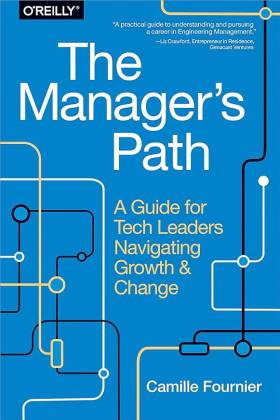
The Manager’s Path by Camille Fournier is well-written and extremely practical. It discusses the before and after of going into management or technical leadership, and is relevant for both new and novice leaders in tech.
I ask more questions than I give answers, and if I do supply answers I label them as options. I stress that it is not up to me to make a decision for them, be it technical or otherwise. I find that this approach generates self-confidence and accountability.
LinkedIn: https://il.linkedin.com/in/karenzellnercohen
Twitter and Medium: @karen_meep
… [Read more](https://www.managersclub.com/unveiling-the-secrets-to-new-manager-success/ "Unveiling the Secrets to New Manager Success")
… [Read more](https://www.managersclub.com/accelerating-ai-in-your-team-strategies-for-success/ "Accelerating AI in Your Team: Strategies for Success")

In this video, Rajesh Janakiraman, an engineering manager at Google, shares his insights and experiences on leading business critical projects while ensuring his team remains motivated and doesn’t burn out. Business critical projects can be intense, high visibility deadlines that often shift roadmaps and include executive-level oversight. Building the right team, maintaining communication, and managing expectations around these challenging projects are crucial to preventing burnout and driving results.

Are you on the lookout for a collaborative, engaging community tailored specifically for your role? Look no further! Introducing the Managers Club Discord server dedicated to leadership in engineering. We’re a community of engineering managers, team leads, and CTOs who come together to share experiences, best practices, and insights.

Are you an Engineering Manager curious about gauging your effectiveness and success in your role? In this insightful episode, we dive deep into metrics and stakeholder management with Ivan Bilan, an experienced engineering manager. Discover the core metrics for measuring engineering manager performance in people leadership, product quality, delivery, and self-promotion, and learn the importance of stakeholder management in driving team success. In this video, we will be looking at how to measure success and performance for managers. We’ll be exploring different methods and tools that managers can use to measure their own success, as well as the success of their team. Don’t miss out on these valuable insights and strategies!

In this engaging conversation, experienced technical recruiter Kate Parton shares vital advice and insider tips for candidates seeking job opportunities in the tech industry. She discusses red flags to watch for, navigating compensation discussions, common misconceptions about the recruiting process, and how to make the most of your partnership with a recruiter. Discover the role of social media and the rise of AI in the hiring process. Kate shares valuable tips and advice on making your job search and interview process smoother and more successful. Tune in for an insider’s perspective on the world of recruitment and how to avoid common pitfalls!