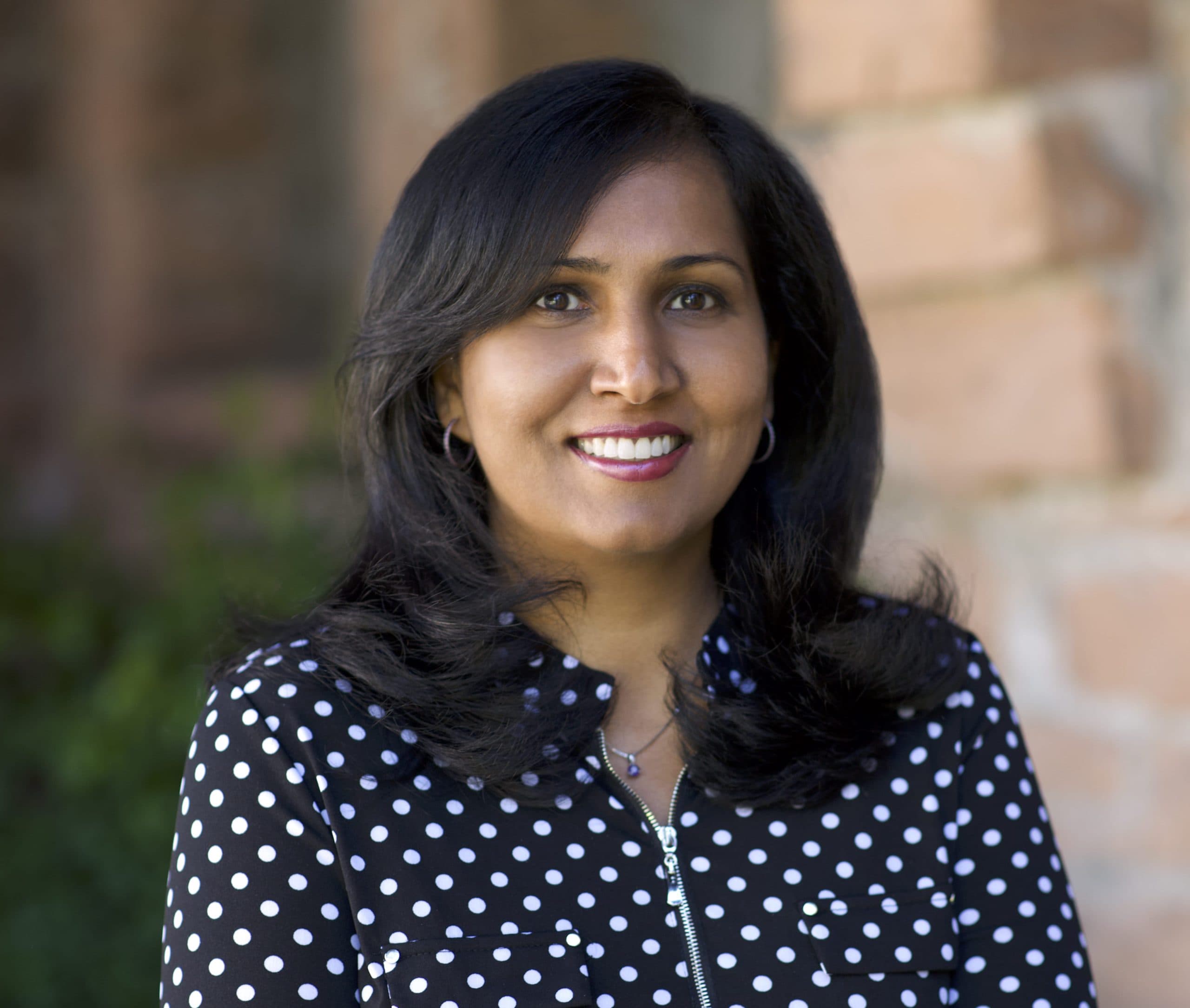
Interview with Anthony Mazzarella, Director, Core Engineering at BAMTECH Media
By Vidal Graupera · · 7 min read


Location: Bucks County, Pennsylvania
Current Role: Director, Core Engineering, BAMTECH Media
What’s your background and how did you get into management?
I spent the first decade of my career chasing global scale challenges related to databases and distributed systems. In every position, my curiosity kept me deeply engaged with operations and infrastructure. Which lead me to BAMTECH Media – then MLB Advanced Media – as a software engineer helping a company achieve the ever-coveted “DevOps transformation.”
Two years later, I was offered the opportunity to take on a leadership position. My response, had you asked me then if I wanted to be in management? Of course not: I was intent on spending my last professional breath inside of vim. But then I thought about it.
Sharing, teaching, and mentoring had always been one of the most satisfying aspects of my professional career to that point. Likewise, a quest for “greater impact” had been my primary driver for moving on from positions prior, and it had become increasingly clear to me that my next step to increase impact was in scaling myself through leadership.
So, here I am.
What are the biggest challenges you face?
My company is in a period of hyper growth, both in terms of business and staffing. Throw in an acquisition by Disney, and things are really interesting right now. Funnily, it’s not the growth or change that’s a challenge, so much as their side effects. This has two facets.
First, there’s dealing with frequent stretches where the majority of my information is imperfect. When you’re spread particularly thin, the volume of information and degree of imperfection increases significantly. This has lead to a lot of my time spent weighing trade-offs of things rather than doing them. Is deep diving a stakeholder’s issue more important than fleshing out richer requirements for an upcoming feature? Prioritization is a huge struggle.
Second, I have a minimally-acceptable level of support for my team below which I am unwilling to fall. For example, 1-1s and support of my engineers’ growth opportunities are non-negotiable responsibilities. These can feel like obvious areas to compromise in, but failing to meet this bar only hurts the team, which spells tragedy long-term.
My immediate response involves re-centering. That is, looking at what was essential, and seeing them again for the first time in the current context. What’s essential now? What can become essential at a later date, when the context changes again? This is never an easy exercise, but is key to sustainability.
What is your approach to hiring?
Generally speaking, I work hard to make the process human. Everyone will agree that hiring is expensive and stressful. What is often lost when developing a hiring process is that it’s expensive and stressful for both parties. As a result, organizations end up with a process that optimizes for the hiring party. Aggressive scheduling, an opaque process, sunset dates, and gotcha-style interview sessions all put a strong candidate at risk. And not just in terms of performance: Many of these are the antithesis of inclusive.
People are at their best when they’re comfortable. Likewise, not everyone’s circumstances allow them the flexibility and urgency that some companies expect. By being transparent early in the process and prioritizing the candidate’s experience, my intent is to set them up to more wholly represent and express themselves throughout the interview series. This is more expensive overall, but it’s an easy trade-off in favor of a dynamic and engaged candidate.
Which is why, specifically as an engineering manager, I like to evaluate the practical skills of a candidate, well, practically. No whiteboard coding. No irrelevant algorithms. No questions about filling an airplane with water balloons. Since I’m not hiring a team to steal me a NOC list, interviewing a candidate with those methods doesn’t help my evaluation. Instead, I use a time-boxed take-home exercise pulled from the team’s common challenges. For example, our software engineer candidates are given a challenge involving concurrency in Go and a distributed systems thought exercise. This not only helps us evaluate the directly applicable technical skills of a candidate, but frees up time during the on-site to dig deeply into topics such as systems design, software architecture, and career aspirations.
What’s your advice for managers who are just starting out?
Embrace the reboot. All that knowledge of distributed systems, Linux, programming languages, and systems availability gained over the last n years? Well, I have some bad news: None of it is going to help you get through your first 90 days as a manager. Fret not, though. There is some good news! This can and should be, exciting.
My fondest memories of my time as an engineer involve being thrown into the deep end. Taking on an entirely new technology, paradigm, or scale demand is difficult, but it was always venturing outside my comfort zone that delivered the biggest reward. As soon as you decide to pursue management – and you did decide yourself to do this, right? – the next little while is going to unquestionably be rough. Bask in the turbulent unknown the same way you did as an engineer, and channel it to move you forward.
All good? Great! Now, don’t stop being open and honest about the support you need. I’ve turned away associate-level engineers because my team didn’t, at the time, have the bandwidth to properly support and mentor them. Yet, somehow, new managers are almost always promoted and simply thrown into the stew pot. Lean on your peer managers and leadership, and find communities, both local and online, to supplement them.
Whats your work day like and how do you manage your time, emails, etc.?
I start my day at 7:00 AM with a cup of coffee and a reading ritual of Adrian Colyer’s Morning Paper, Lobsters, and my tech-centered Twitter list. (Tech-centered because who needs to be enraged first thing in the morning?) I work remotely, so this is a vitally-important emulated commute to help me transition from home to work, mentally. I end my day similarly, only trading reading for a couple rounds of Rocket League.
Work starts with a run through my various inboxes: e-mail, Slack, GitHub, JIRA, and wiki. This helps to update my known state of the world, and gives me a clear opportunity to unblock things. From 10:00 to 13:00 are the core hours of overlap for our global teams, and is when the majority of my meetings occur. The rest of my time is spent enabling my team, and working on, or through, our strategy.
Effectively managing my own day is less about specific ways of using e-mail than it is efficiently using my spoons. I block off between 60 and 90 minutes each day to focus on my primary goal for the week. I disable notifications 100% of the time, save for meeting reminders and PagerDuty, so my engagement with say, Slack is on my terms. I bin pack my most important standing meetings (e.g. 1-1s) on Tuesdays and Thursdays. These are all things to help make my days passably predictable, and give me the best chance to engage fully throughout the day.
What’s a personal habit that contributes to your success?
My answer to this question, for the longest time, was allowing myself to be wrong. That’s still hugely important, for sure. However, more recently, I’ve realized its actually being comfortable with letting things fall to the floor. This can be a lingering to-do, an e-mail awaiting a reply, or even a significant deliverable.
Early in my career, my only mode of operation was “keep track of and do literally everything.” Turns out? Not so sustainable. When I started as a manager, I quickly fell back on that pattern because a lot people were now dependent on me for far more than just an API or tool. How could I not be on top of every single ask? I’d be failing otherwise!
The reality is, items of true importance telegraph that fact. Similarly, that task that’s been sitting for three weeks is whispering, “it’s no big deal,” every time you skim passed it on your to-do list. Rands put it best when he said, “there are people and inboxes everywhere that are going to remind you of this work.” Taking advantage of this fact, and trusting my input streams to keep my own priorities honest, is a large contributor to my survival.
Share an internet resource or tool that you can’t live without.
Bear. It is the first app I’ve ever used that’s managed to take over some of the responsibilities of my notebooks, and I’ve tried oh-so-many. It’s beautiful. Its opinionated bits are limited to areas that don’t flare my distaste for restrictions. It knows exactly what kind of text editor it wants to be, and excels at it.
Five stars. 10 out of 10. A-plus-plus. Whatever the thing is that the rating system you use uses, it gets the most of them.
If you could recommend one book to managers, what would it be and why?
I feel like the big dogs – e.g. Radical Candor and Managing Humans – are implied. So, I’ll go off the beaten path.

Setting the Table: The Transforming Power of Hospitality in Business by Danny Meyer. It has a cheesy title that sells an image of a restaurateur’s how-to. In actuality, it contains a warm discussion about servant leadership and the importance of human experiences. There’s certainly a business-focused thread that runs the length of the book, but Meyer never diminishes the importance of the people or the relationships that enable it.
On top of being a good read about leadership in general, I find learning from sources outside my own industry to be invaluable. One of the white papers I cite most in chats about human-computer interactions is a study done by the NHTSA on tire factors. Similarly, Setting the Table presents some views on leadership that, for me at least, were not so obvious as someone firmly rooted in technology.
Where can we go to learn more about you? (Linkedin, Twitter, Github, etc.)
My personal site links out to everything. Perhaps predictably, most of it involves my dog or food.
This series asks engineering managers to share their experiences with the intent of helping other engineering managers learn and improve. Have someone you want to see featured _or questions you think we should ask? Contact me