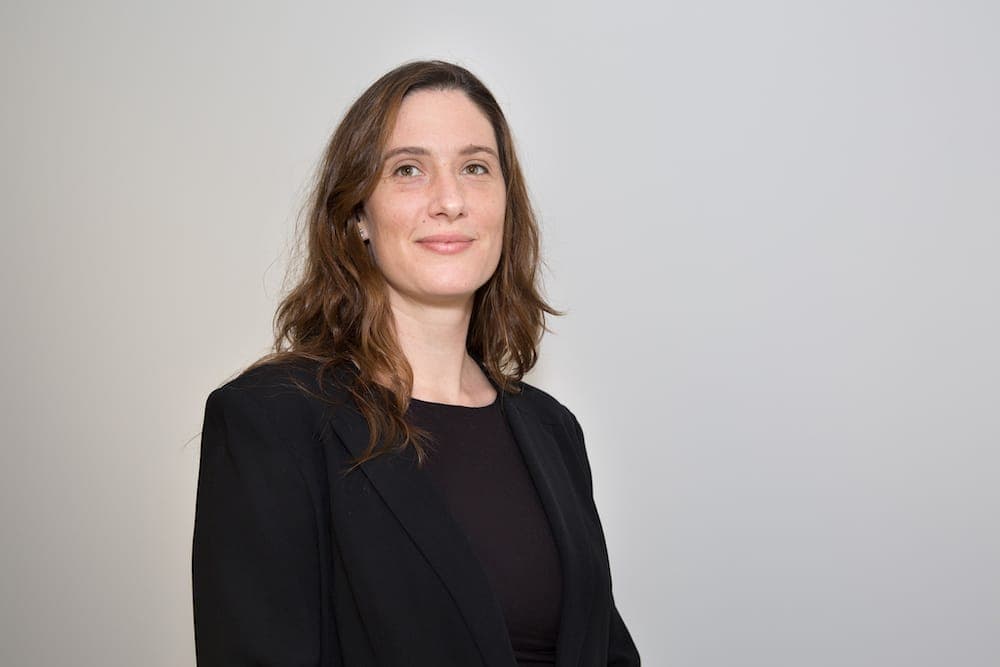
Interview with Anne Hjortshoj, Manager, UX Research and Strategy, Cisco Cloud Security
By Vidal Graupera · · 5 min read


Location: Boston, MA
Current Role: Manager, UX Research and Strategy, Cisco Cloud Security
What’s my background, and how did I get into management?
I’ve been working in product design and strategy in some form or another for 20+ years. I started as an information architect (a UX designer), and quickly moved into a lead role. After the dot-com era imploded, I switched to independent consulting, and did product design and strategy work for big brands, including Kashi, M&M, Dove, New Balance, Houghton Mifflin, Affinova (Nielsen), Fidelity Investments, Boston Children’s Museum, Rue La La, WGBH, and Frito-Lay.
I became a people manager when I took a detour into product management; I had joined a company that didn’t have product management at all, and product management was needed in order to make good user experience happen in the product. I hired a couple of project managers to work for me there, which was the first time I’d managed. It was definitely an adjustment; I had a new-to-me role, along with management responsibilities that I’d never had before!
I returned to UX for my next job, at a cloud security startup, which was acquired by Cisco in August of 2016. I currently manage a team of designers and researchers in Cisco’s Cloud Security organization.
What are the biggest challenges you face?
I think a big challenge for any manager is to give feedback in a productive way. I try hard to not dictate a total direction, or to micromanage. Ideally, my job is to remove obstacles and to empower the people who work for me.
I want my people to eventually move up (and potentially be managers themselves, if that’s their goal); it’s important that I help them with any approaches that they need to improve, and to provide context that they might not have, at their level, on what’s going on in the org, and how they might need to modify what they’re doing in order to succeed.
One of my tasks as a manager is to digest broad business goals and to communicate to my team how their work contributes to the business’ success. I think for designers specifically, it’s important to ground their work in the needs of the overall business, and to make sure that UX is demonstrably providing value and contributing to great business outcomes.
We are often challenged, in the UX role, by the perception that the job of UX is to just make things pretty; I work to teach designers that their work is really about making sure that customers can access the full value of a product or feature, and that user research supports and feeds strategic business decisions.
What is your approach to hiring?
I look for people who aren’t only good designers with empathy for users. Empathy for users is the absolute minimum requirement for working as a designer. I want to know: can this person talk to engineers? Can they present to executives? Is there a drive to validate assumptions with customers, and to learn and iterate?
Additionally, I want people who can empathize with the organization around them, to make it easier to move designs to execution, and to understand the where the product needs to go to be successful in the market. We need to be able to communicate why design is important to the various roles in the organization, and to tie good design to good business outcomes. This isn’t something that designers are trained to do when they start their careers, but it’s something I try to instill, and I definitely look for it in the people I bring on board.
What’s your advice for managers who are just starting out?
When people start to manage teams, it can be difficult to escape the feeling that you’re failing in some way, all the time, because—unlike working as an individual contributor—your work is never done. You will always be failing in some way. Learn to prioritize. Your job is to unblock and enable your people, and to listen closely for issues that you may have to manage indirectly. Also: get very comfortable with delegating! And be humble, because the minute you think you have it all figured out, you’ll be presented with a situation that challenges you.
Whats your work day like and how do you manage your time, emails, etc.?
My days vary. Sometime I have meetings from 8:30am onward, with no time to do anything except answer quick emails and check in with people on IM. I don’t use email as a to-do list; email is asynchronous communication by design (it’s the modern version of the interoffice memo), and I’m content to let emails sit for a bit while I get other work done. I typically look at IM when I wake up in the morning to see if there are any issues I need to tackle from our location in Tel Aviv, where I have a designer. I use our chat program quite a lot, to monitor different channels devoted to aspects of design work. I review any work under discussion (my team posts screens for approval), and make sure that people have what they need to be successful. I also work on more strategic things, like our evolving research program, and I check in with product management and engineering on a regular cadence to make sure that the UX group is meshing with other teams in a productive way.
What’s a personal habit that contributes to your success?
I’ve found it to be extremely useful for me to form as many informal networks as possible. I need to maximize my ability to get things done, and I can’t do that if I my communication paths follow an org chart. One way I’ve fostered this is to have a few 1x1s with people who are a few hops away in the organization; when I talk to them, I understand where I need to adjust my approach in order to make an initiative successful, and it’s just helpful to get unfiltered information and feedback from their perspective.
Share an internet resource or tool that you can’t live without.
I record the things I need to do as they come in, in a format where I can easily take action later. I take very loose notes in TextEdit and immediately dump any to-dos into a Trello or Milanote board. Trello is great for to-do list management, and Milanote is great for visualizing things on a whiteboard, collage-style. I use them together all the time, it’s easy to link from Milanote back to Trello.
If you could recommend one book to managers, what would it be and why?
I like The Hard Thing About Hard Things, by Ben Horowitz. It’s not really for people managers (it’s for executives), but I found it invaluable when the organization I was working in as a startup was growing quickly. It provided some insights into big business challenges, and how to grow an organization the right way. I’m also a fan of Managing Humans (Michael Lopp) and Org Design for Design Orgs (Peter Merholz and Kristin Skinner).
Where can we go to learn more about you? (LinkedIn, Twitter, Github, etc.)
I’m on LinkedIn LinkedIn
This series asks engineering managers to share their experiences with the intent of helping other engineering managers learn and improve. Have someone you want to see featured or questions you think we should ask? Contact me.