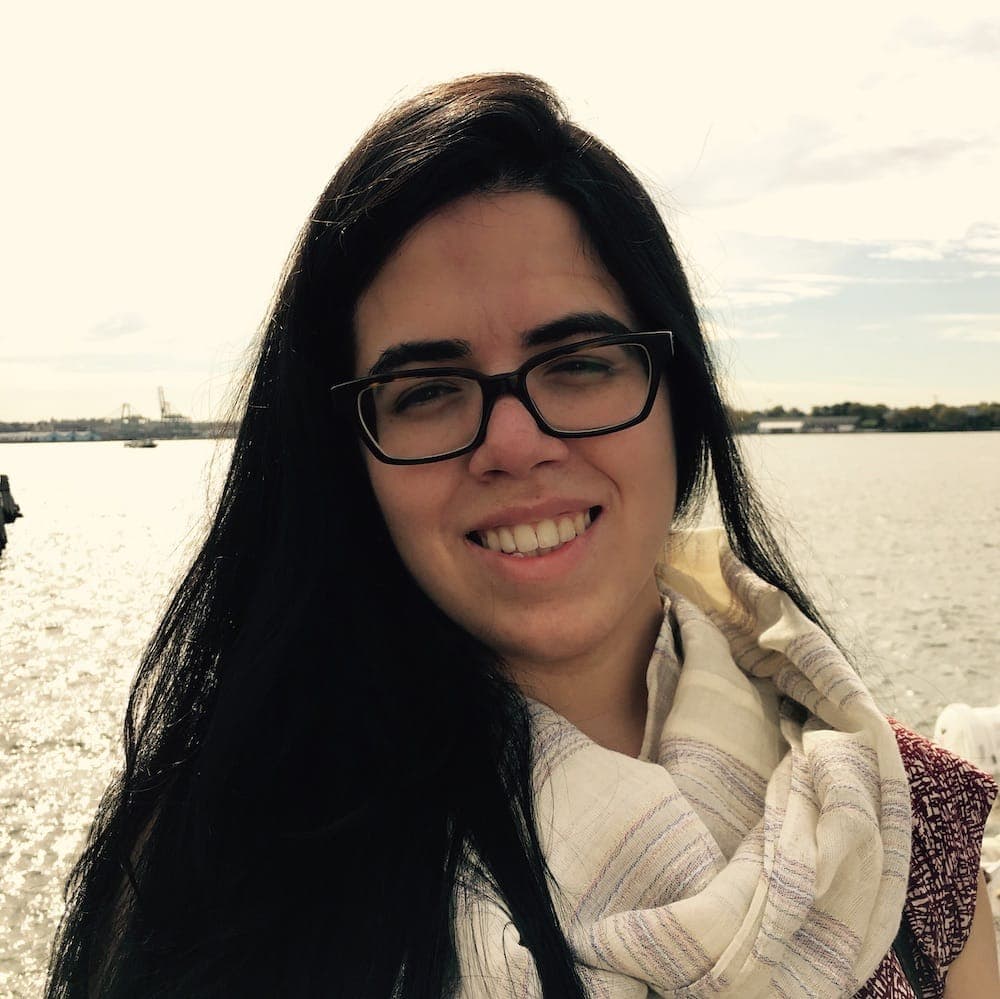
Interview with Alexandra Paredes, Head of Engineering at Code Climate
By Vidal Graupera · · 8 min read
What’s your background and how did you get into management?
I studied Computer Science in Caracas, Venezuela. Before finishing college, around 2009, I was working part-time building mobile applications for BlackBerry and Android using Java and PhoneGap (currently known as Apache Cordova). Building things that others found useful was thrilling. I treasured this experience because it served as a good introduction to understanding that “shipping” a product is more than coding.
In the following years, I went on to work remotely for different startups in the US and Europe. My focus shifted from mobile to the backend and building resilient systems, which to this day is something I feel passionate about. I moved to the US in 2014 which opened the door to new professional challenges and opportunities.
In January of 2017, I joined Code Climate as a Senior Software Engineer. At heart, I’m a maker and when I realized that I could multiply my impact by empowering others, I developed a deep interest in understanding what it takes to empower an engineering team to build and ship amazing products. Last year, I transitioned to my current role as Head of Engineering.
What are the biggest challenges you face?
Switching between tactical and strategic thinking can still be painful for me. Code Climate is a lean company and the engineering team is fairly small (8 full time engineers and a couple of contractors). We have 2 products, a growing customer base of over one thousand companies, and our system on any given day will receive and process over one million webhooks. We’re small enough that I’m still involved in some day to day processes that requires me to be very tactical, for example, weekly planning and working closely with Product to understand if projects needs to be re-scoped or priorities need to be shifted. At the same time, it’s my responsibility to understand where the company is heading towards and ensure I keep that in mind as I grow and coach the team.
I have found some strategies that make it easier for myself to have time during the week for strategic thinking: grouping my 1-on-1’s to the later half of the week and coaching on others in some of my responsibilities so I can effectively delegate them. On Tuesdays, I have a big block of time on my calendar that I use it to go over conversations and feedback from my direct reports, peers, manager and prepare proposals for medium/long term strategies.
Another challenge that I face as I lead a small team in an agile growing company is ensuring that as a team we’re investing time to explore, learn and grow. It’s easy to get busy with day to day activities, and monthly objectives. I work closely with the team to create and support spaces where we can explore new technologies and share learnings. Some activities that have worked really well for us are: hack weeks, lunch and learn, book clubs and conferences.
And finally, I’m an immigrant woman in tech. I’ve faced some challenging situations as I’ve built my professional career in the US. Luckily, on the way, I’ve created a support network of amazing friends, mentors and sponsors. I recognize that this is a privilege. I want to give other Latinas the opportunities to build those networks and that’s why I co-lead Latinas in Tech NYC with Angela Medina, Daniela Caicedo and Tatiana Carret. This is a project I’m very passionate about, fortunately Code Climate is very supportive of it, but balancing it all out is definitely a challenge.
What’s your approach to hiring?
When hiring, I think that candidates are interviewing us as well so I make an explicit and intentional effort to ensure our hiring process is fair, inclusive, respectful, and overall a positive experience. To achieve this, I believe consistency in the interview process is key.
While designing the interview process for a particular role, we start by discussing our motivation behind opening the role, which challenges will they be working on and how do we hope to see them grow in our organization. Answering these questions allows us to identify the skills that we’re looking and give us the ability to:
- Write a job posting that effectively communicates to candidates what the position is about, what we have to offer, and what we’re looking for. I’m a fan of using tools that eliminate biased language. Also, I often reach out to my network of peers to ask for feedback on my job postings.
- Design standardized questions and exercises that will match as much as possible what they would be doing day to day if they were to join the company. My goal is to have as many points of view as possible, so we involve Product and design in the process as well. By having standardized interview sessions, we’re able to train interviewers so they’re comfortable with the topic we’re evaluating. It’s also a good opportunity to coach them on biases and strategies to address them. Ultimately, this means that we are better equipped to fairly evaluate candidates.
What’s your advice for managers who are just starting out?
As a new manager, you will be faced with a variety of new situations, challenges are often vague and is up to you to bring clarity and definition so your team can succeed, the way you behave and communicate matters and sets the tone for the team, and there are so many other little things that change as you transition into the role. It can feel overwhelming and that’s completely normal.
My advice is to acknowledge those feelings and try to dig deeper to understand what is the source of them. This is a very powerful way to identify what are the areas you’re concerned with and be able to better prepare yourself. Cultivating this self-awareness comes really handy when managing and coaching others. I talked about this at Calibrate SF as part of my framework to make the unknown manageable.
Also, invest time in understanding what motivates every member of your team and what are their short, medium and long term goals. Check in on these questions periodically. 1-on-1’s are specially useful way to get this insights. Having this understanding will allow you to create an environment where your team can do their best work and continue their professional development.
In addition, I would advise new managers to understand their new role and the goals they’re responsible for within the organization. Discuss with your manager what success looks like. Have conversations with peers that can give you more context about the business. The more information you have the more effective you will be able to empower your team.
Speaking of empowering your team, it’s easy for ICs transitioning into management to want/try to “get things done” themselves. It’s a completely normal reaction but beware of it! Now your main responsibility is to enable your direct reports by coaching them, sharing context and providing with any other tool/support they could need.
Last but not least, most of the time people are not purposely trying to do a bad job or act poorly so when in doubt, default to trust. At a difficult moment, it’s best to start from a place of trust and empathy.
What’s your work day like and how do you manage your time, emails, etc.?
I usually try to start my day 30 mins before our daily standup so I can review my schedule and identify what is my main goal for the day. Mondays I work with the team and Product to kick off the week, share as much context as possible and to discuss priorities. Tuesday, I have only a couple meetings which is great because it means I can get some focus time that I’ll use for initiatives like career development, hiring and other longer term initiatives. The rest of the week I have a lot of meetings: 1-on-1s and team syncs. Throughout the day, I’m available in Slack but because I don’t want to be a blocker or distracted at meetings, I’ll redirect to my team when appropriate. At the end of day, I’ll take 20mins to wrap up by making sure I have inbox-zero (the trick for me is to be disciplined about reading the emails that are important to you and archiving everything else), quickly reviewing my notes and make reminders of any action item.
What’s a personal habit that contributes to your success?
To be honest, I wish I was better at habits. I have routines that I tried to maintain and iterate on but also I keep things flexible because I know that life is unpredictable and I leave room for that. At a higher level, I’d say there are a couple questions that I continuously ask myself: what could I’ve doing better, what is my goal/motivation and what do I feel proud of. I think going through this exercise keeps me focused and motivated. Recently, I’ve started to run. I’d used to do it regularly before moving to the US. It has been great to get into that rhythm again and working towards making it a habit ;).
Share an internet resource or tool that you can’t live without.
I use Todoist to track my personal and work todo lists. I’ve set up Todoist, Zapier and Slack in a very convenient way where I can add/edit/mark as done todos from Todoist, as well as receiving todo reminders all in Slack.
If you could recommend one book to managers, what would it be and why?
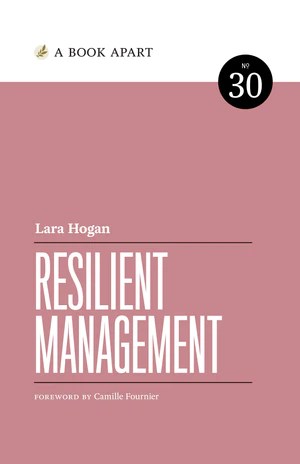
For new managers, I recommend Resilient Management by Lara Hogan. What I like the most is that Lara shares very practical tips and frameworks that you can put into practice immediately. Actually, this book is good for all managers but familiarizing yourself with this concepts is particularly helpful when you’re starting out.
Also, I recommend reading Accelerate by Nicole Forsgren PhD, Jez Humble, Gene Kim is a great read on applying a scientific approach to engineering leadership and learning the skills to drive high performance.
What’s your approach to mentoring and coaching members of your team?
My approach will depend on the person and situation. At a higher level, I liked to keep in mind that I can: coach, mentor and sponsor. Jess Mink articulates very well what each of them mean on her post New Manager Resources. On my day to day, I’m often switching between coaching and mentoring. While I’m coaching or mentoring someone, I remind them that I’m sharing my past experiences and what has worked for me, and let them know that my experiences are not the only way to approach a situation or challenge, and I have an open dialogue with them. An important part of my role is to practice Sponsorship effectively. Also, as I become aware of opportunities for the members of my team to grow, I advocate for them to take on challenges that will take them out of their comfort zone and allow them to learn new skills.